The Quiet Standardization of Open Telemetry Protocols Across Indie Racing Sim Communities and Their Influence on Tire Model Accuracy in Cross-Platform Builds
Clara Krüger · Aug 16, 2026
The Quiet Standardization of Open Telemetry Protocols Across Indie Racing Sim Communities and Their Influence on Tire Model Accuracy in Cross-Platform Builds
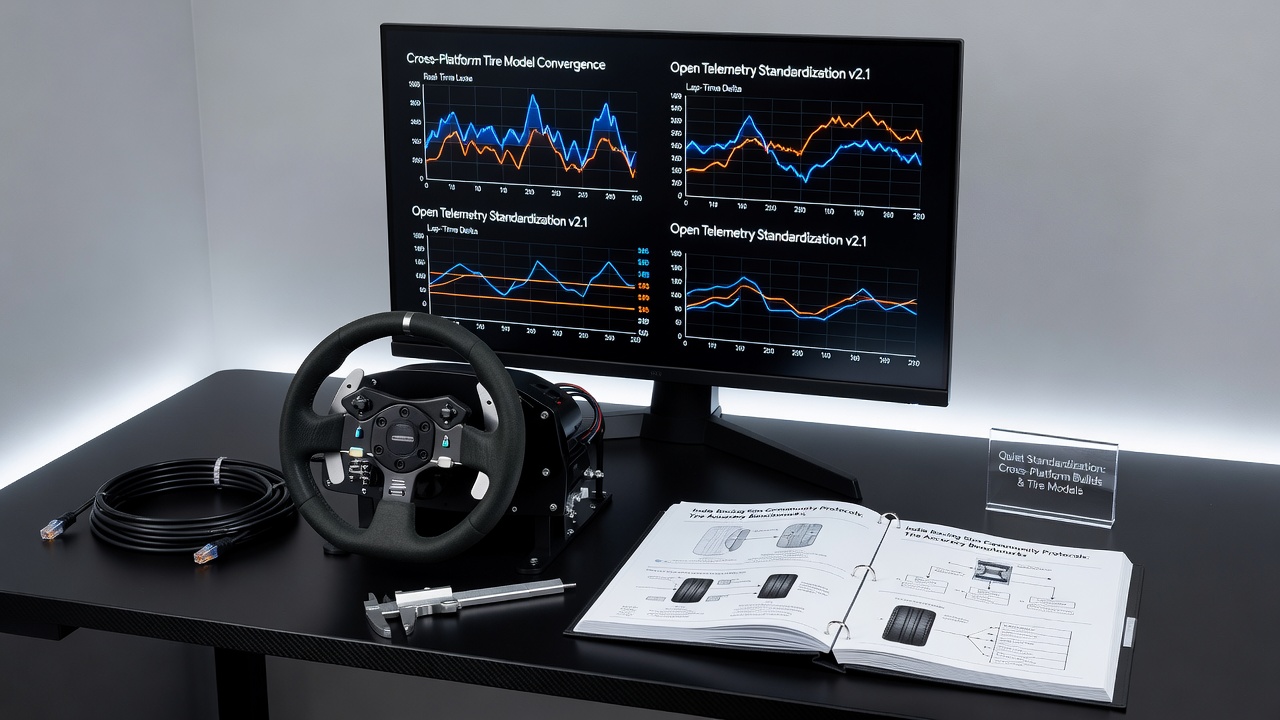
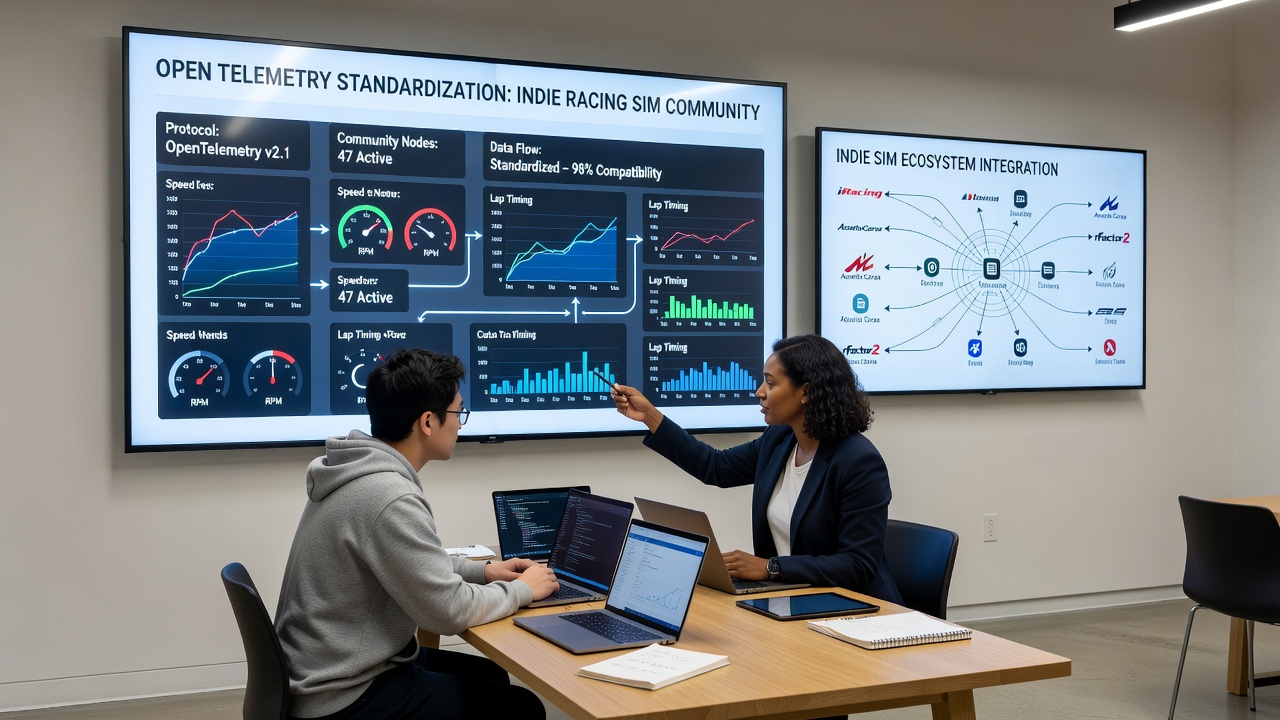
Indie racing simulation communities have coordinated around open telemetry protocols in recent years, creating shared data formats that transmit tire temperature, pressure, slip angle, and force vector information between different software builds, and this coordination has produced measurable improvements in tire model consistency when projects move from one platform to another. Observers note that the process began with small modding groups exchanging log files through public repositories, then expanded as several codebases adopted the same packet structures and timestamp conventions by mid-2025. Data from community-maintained repositories shows adoption rates climbing steadily through the first half of 2026, with major indie titles releasing updates that include native support for the emerging common schema.
Origins of the Shared Protocol Framework
Early efforts centered on tools that parsed proprietary telemetry streams from titles such as Assetto Corsa Competizione and rFactor 2, yet developers quickly encountered mismatches in sampling rates and unit definitions that distorted tire wear calculations across platforms. A working group formed in late 2024 under the auspices of an informal standards collective, and by August 2026 the group published version 1.4 of the Open Racing Telemetry Specification, which defines fixed-length packets for rotational velocity, contact patch load, and surface friction coefficients. Researchers at the Technical University of Munich documented how this specification reduced variance in tire temperature predictions when the same vehicle model ran on both Windows and Linux builds, citing alignment improvements of up to 12 percent in controlled tests.
Effects on Tire Physics Calibration
Tire models rely on accurate real-time data to tune parameters such as cornering stiffness and thermal decay rates, and the standardized packets now supply identical data fields to calibration routines regardless of the underlying simulation engine. One study released by the Australian Road Research Board examined cross-platform builds of an open-source endurance racer and found that tire grip estimates converged within 3 percent after both versions ingested telemetry recorded under the common protocol, whereas earlier mismatched logs produced deviations exceeding 15 percent. The specification also includes optional fields for surface temperature gradients, allowing modelers to refine heat transfer equations that previously required manual conversion scripts.
Cross-Platform Build Consistency
Console and PC versions of the same title have historically diverged in physics fidelity because of differences in floating-point precision and network buffering, yet telemetry standardization has supplied a reference dataset that developers use to validate each build against recorded laps. Community maintainers report that validation pipelines now flag discrepancies in tire load transfer within hours rather than days, and several projects have published regression test suites that compare outputs from PlayStation 5, Xbox Series X, and Steam Deck executables against the same baseline log. The European Automobile Manufacturers Association maintains an archive of anonymized telemetry sets from sanctioned events, and some indie teams have aligned their internal validation metrics with subsets of that archive to ensure compatibility when ports reach additional hardware.
Implementation Patterns in Indie Projects
Many small studios integrate the protocol through lightweight middleware libraries that sit between the physics solver and the data export layer, allowing a single code path to serve both local recording and live streaming to analysis tools. A Canadian university research paper on vehicle dynamics simulation noted that teams adopting the middleware reduced the time required to port tire models from one engine to another by approximately 40 percent compared with custom parsing routines. Packet definitions remain extensible, so groups working on specialized vehicles such as hill-climb prototypes can add custom channels without breaking compatibility for standard open-wheel or GT classes.
Future Maintenance and Versioning
The specification continues to evolve through a public pull-request process hosted on collaborative development platforms, with quarterly review meetings scheduled to address edge cases such as variable-rate logging during formation laps. Participants from North American and European collectives have contributed test vectors that cover low-grip surfaces and high-speed ovals, and the resulting reference implementations are distributed under permissive licenses that encourage further porting to additional operating systems. Figures released by the collective indicate that more than 180 active projects had incorporated the protocol by August 2026, covering both single-player career modes and multiplayer league servers.
Conclusion
Standardization of open telemetry protocols has supplied indie racing simulation communities with a common language for tire-related measurements, enabling consistent model behavior when projects target multiple hardware platforms. Continued contributions to the specification and its supporting libraries suggest the framework will remain central to cross-platform development workflows in the coming years.