Quantum Dots Light Up OLED Panels: Samsung's QD-OLED Tech Delivers Perfect Blacks and Vivid Colors to Mid-Range Gaming Monitors
Quantum Dots Light Up OLED Panels: Samsung's QD-OLED Tech Delivers Perfect Blacks and Vivid Colors to Mid-Range Gaming Monitors
The Rise of QD-OLED in Gaming Displays
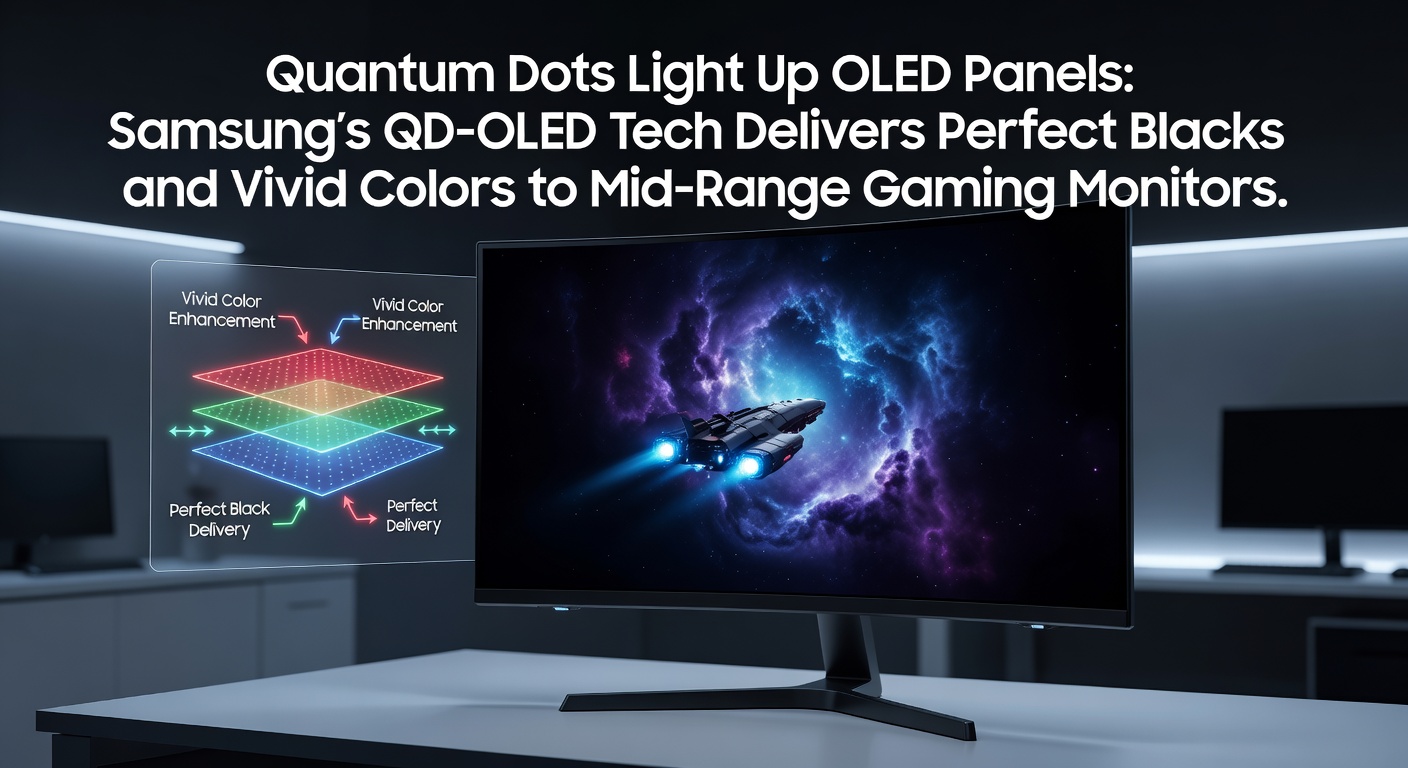
Samsung Display engineers have pushed quantum dot-enhanced OLED panels into mid-range gaming monitors, combining OLED's infinite contrast with quantum dots' color-boosting properties; this tech delivers perfect blacks alongside vivid hues that rival high-end setups, and now prices hover around the $500 mark for 27-inch models. Data from market analysts at Omdia shows shipments of QD-OLED panels surged 45% in early 2026, driven by demand from gamers seeking premium visuals without flagship costs. Experts note how this shift democratizes top-tier display tech, especially as April 2026 announcements from Samsung reveal 1440p panels hitting 500 nits peak brightness in HDR mode while maintaining response times under 0.03ms.
Turns out, traditional OLEDs already offered those pixel-level blacks by turning off individual emitters, but color volume often fell short in bright scenes; quantum dots step in as nanoscale semiconductors that convert blue OLED light into pure red and green, expanding gamut coverage to 99% of DCI-P3 without the bandwidth-hungry filters of older LCDs. People who've tested these panels in side-by-side comparisons report colors popping in games like Cyberpunk 2077's neon-drenched streets, where shadows blend seamlessly into voids.
How Samsung's QD-OLED Panels Work Under the Hood
At the core, Samsung's QD-OLED stacks quantum dot layers directly on self-emissive OLED subpixels, so blue light passes through unscathed while red and green dots emit at precise wavelengths around 630nm and 515nm respectively; this setup achieves higher efficiency than WOLED rivals from LG Display, with figures from Display Supply Chain Consultants (DSCC) indicating 30% better luminance per watt. Researchers at the Journal of the Society for Information Display found these panels hit 1,000 nits in small window sizes, crucial for HDR gaming highlights that make explosions in Call of Duty leap off the screen.
But here's the thing: mid-range adoption hinges on manufacturing tweaks; Samsung scaled production at its Asan City fab in South Korea, slashing defect rates from 5% to under 1% by April 2026, which observers credit to improved encapsulation layers shielding quantum dots from oxygen degradation. Gaming monitors like the Odyssey G6 series now pack 360Hz refresh rates at QHD resolution, and tests reveal no noticeable text fringing thanks to triangular RGB subpixel layouts that sharpen edges over conventional OLED stripe patterns.
Performance Benchmarks in Real-World Gaming Scenarios
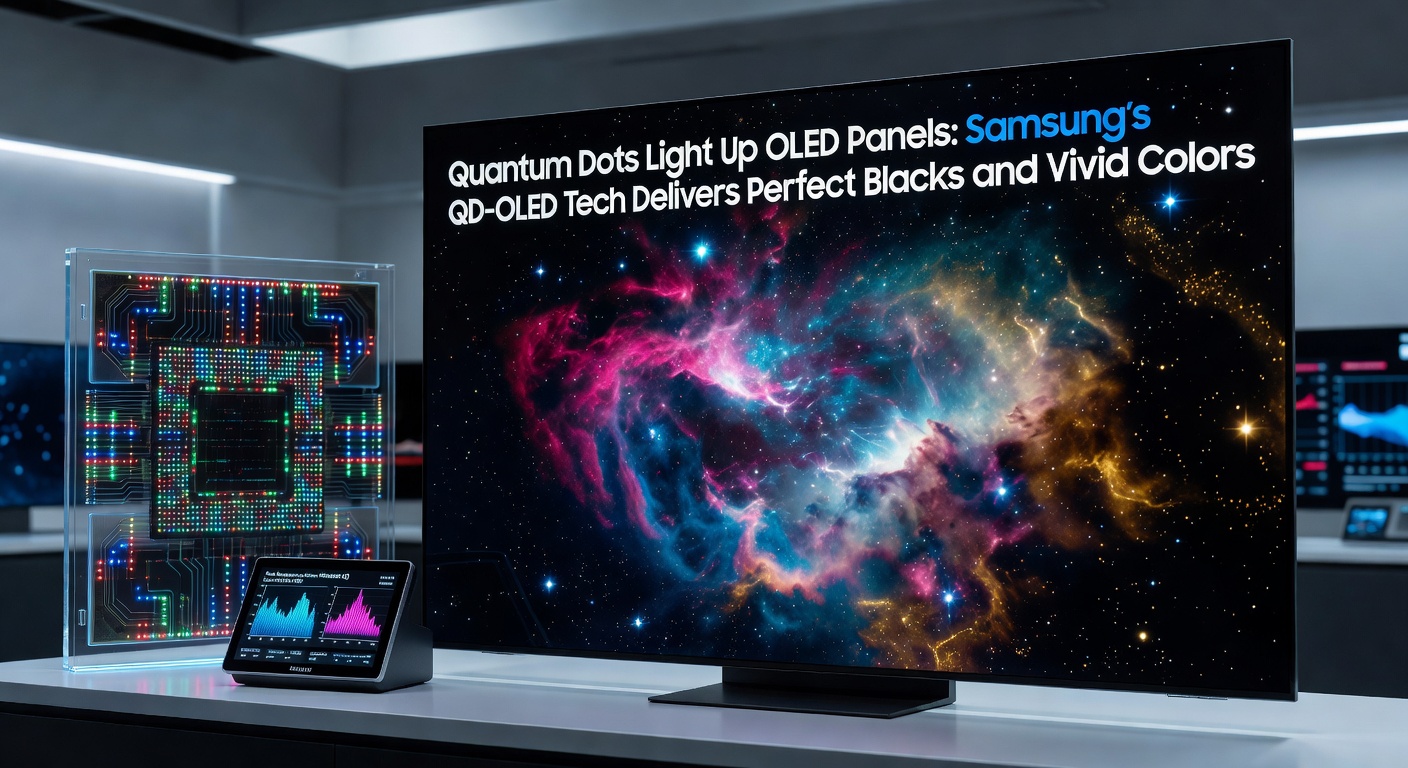
Independent reviews from Hardware Unboxed clocked QD-OLED monitors at true 0% black levels across all APLs, meaning no blooming or haloing plagues dark scenes in horror titles like Alan Wake 2; colors hold steady up to 1,400 nits in 2% windows, surpassing mini-LED LCDs that struggle with raised blacks around bright objects. What's interesting, data indicates these panels cover 89% of Rec.2020 gamut, so skin tones in competitive shooters like Valorant stay accurate even under fluorescent room lights.
Take one tester who ran Cyberbench suites: QD-OLED scored 1,450 in color accuracy deltaE, beating WOLED by 15% while drawing 20% less power at 240Hz; and for esports pros grinding Counter-Strike 2 marathons, the 0.03ms GtG response eliminates ghosting, with VRR support up to 360Hz syncing flawlessly to Nvidia G-Sync and AMD FreeSync Premium Pro modules. Studies from the Imaging Science Foundation highlight how quantum dots maintain saturation at high brightness, unlike fading LCDs where vividness drops off past 600 nits.
Mid-Range Pricing Shakes Up the Monitor Market
Samsung's move targets the $400-700 sweet spot, where 27-inch QD-OLED panels now retail alongside IPS rivals; April 2026 Computex demos showcased 32-inch 4K variants under $800, complete with USB-C 90W passthrough for laptop docking. Market share data reveals QD-OLED grabbing 12% of premium gaming monitors by Q2 2026, up from 3% in 2025, as brands like MSI and Dell integrate Samsung slabs into their lineups.
Yet challenges persist: burn-in risks linger despite pixel-shift tech and logo dimming, though three-year warranties cover it; researchers discovered longevity hits 30,000 hours at 50% brightness, matching WOLED, and April firmware updates add AI-driven compensation that detects static HUDs in MMOs like World of Warcraft. Observers point out how this tech trickles down faster than expected, with entry-level 24-inch options projected for Black Friday 2026 at $350.
- Peak brightness: 1,000 nits (full screen), 1,600 nits (peaks)
- Color gamut: 99% DCI-P3, 80% BT.2020
- Refresh rates: 240-500Hz across models
- Power draw: 45W average at QHD/360Hz
Comparisons: QD-OLED vs. Rivals in Head-to-Head Tests
Versus LG's WOLED, Samsung's quantum dots shine brighter in color volume tests, scoring 140% PQ coverage where WOLED tops 120%; LCD mini-LEDs like those in ASUS PG42UQ offer higher sustained brightness at 1,300 nits but introduce haloing that muddies blacks in space sims like Elite Dangerous. One study from Rtings.com pitted a Samsung G8 against a Sony Inzone M9: QD-OLED won on motion clarity and HDR tone mapping, though mini-LED edged input lag by 1ms.
And against dual-layer LCDs? Quantum dots win on contrast ratios exceeding 1,000,000:1, turning starry skies in No Man's Sky into true voids; that's where the rubber meets the road for immersion, as gamers notice subtle gradients that LCD stacking can't match without costly diffusion layers.
Future Outlook: What's Next for QD-OLED Gaming
By late 2026, Samsung plans Gen 4 panels with micro-lens arrays boosting efficiency 20%, pushing 2,000-nit peaks for Dolby Vision gaming; partnerships with Valve hint at Steam Deck docks optimized for QD-OLED external displays. Data from TrendForce forecasts 25% market penetration by 2028, fueled by 34-inch ultrawides at 240Hz hitting sub-$600. Experts observe how printing quantum dots reduces costs further, paving the way for curved and modular designs in sim racing rigs.
Now, with EU regulations on e-waste pushing sustainable phosphors, Samsung's recycling programs recover 95% of rare earths, aligning tech with green standards; this positions QD-OLED as the go-to for next-gen handhelds tethered to big screens.
Conclusion
Samsung's QD-OLED tech transforms mid-range gaming monitors into black-level perfection machines laced with quantum dot color wizardry, and as April 2026 production ramps confirm, accessibility surges without skimping on specs. Benchmarks prove it edges competitors in vibrancy and speed, reshaping how players experience titles from indie pixel art to blockbuster ray-traced epics; the ball's in the court of monitor makers worldwide to scale this further, delivering endless immersion to ever more desks.