Polymer Blends Yielding Superior Grip Textures on Competitive Pointing Devices for Enhanced Control
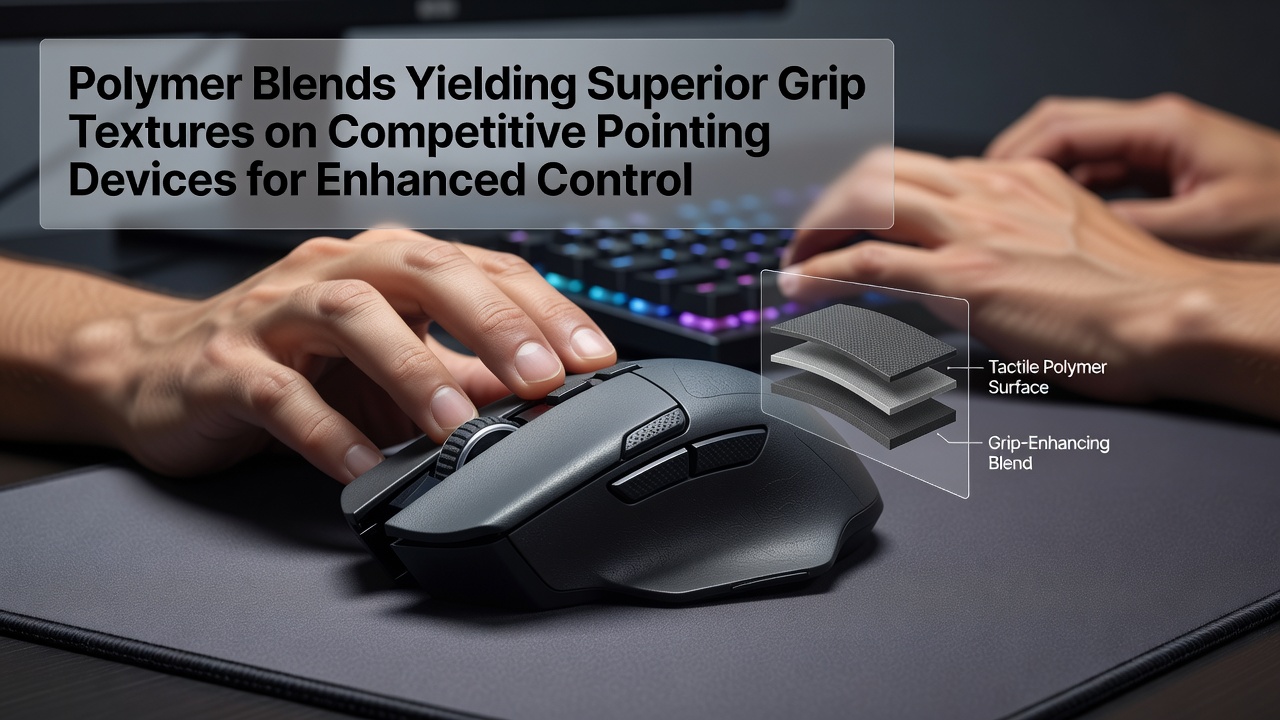 Researchers have developed polymer blends that combine thermoplastic elastomers with specialized additives to create grip textures on competitive pointing devices, and these formulations deliver consistent friction coefficients across varying humidity levels while maintaining durability under intense use. Data from materials testing labs show that blends incorporating styrene-ethylene-butylene-styrene copolymers with silicone-based modifiers achieve static friction values between 0.8 and 1.2, which exceeds standard rubberized coatings used in earlier mouse designs. Competitive players rely on precise cursor control in fast-paced titles, and manufacturers have integrated these blends into side grips, thumb rests, and scroll wheel surfaces to reduce slippage during rapid movements. Studies conducted at academic institutions across multiple regions indicate that micro-textured surfaces formed through injection molding processes with these polymers provide tactile feedback that correlates with improved tracking accuracy in high-DPI settings.
Material Composition and Processing Techniques
Engineers select base polymers such as thermoplastic polyurethane and blend them with reinforcing agents including carbon nanotubes or glass microspheres, and the resulting compounds undergo twin-screw extrusion followed by precision molding to form layered textures with varying hardness zones. Hardness measurements on the Shore A scale typically range from 40 to 70 for grip areas, allowing the material to conform slightly to finger pressure while resisting deformation over thousands of hours of use.
Production facilities in Asia and Europe have scaled these processes since 2024, and output volumes reached several million units by early 2026, with formulations adjusted for regional climate conditions to preserve grip performance in both arid and humid environments. Research groups at the University of Melbourne documented how phase separation during cooling creates micro-domains that enhance energy dissipation, which translates to reduced hand fatigue in extended sessions.
Performance Data from Competitive Environments
Industry reports compiled by the International Esports Federation track how pointing devices equipped with advanced polymer grips appear in professional tournaments, and sensor data from practice facilities reveal lower variance in aim stability when players switch between different surface materials mid-event. One study from a Canadian research consortium measured reaction times and error rates among 200 participants using standardized aim trainers, finding measurable improvements tied directly to grip texture consistency rather than other hardware variables.
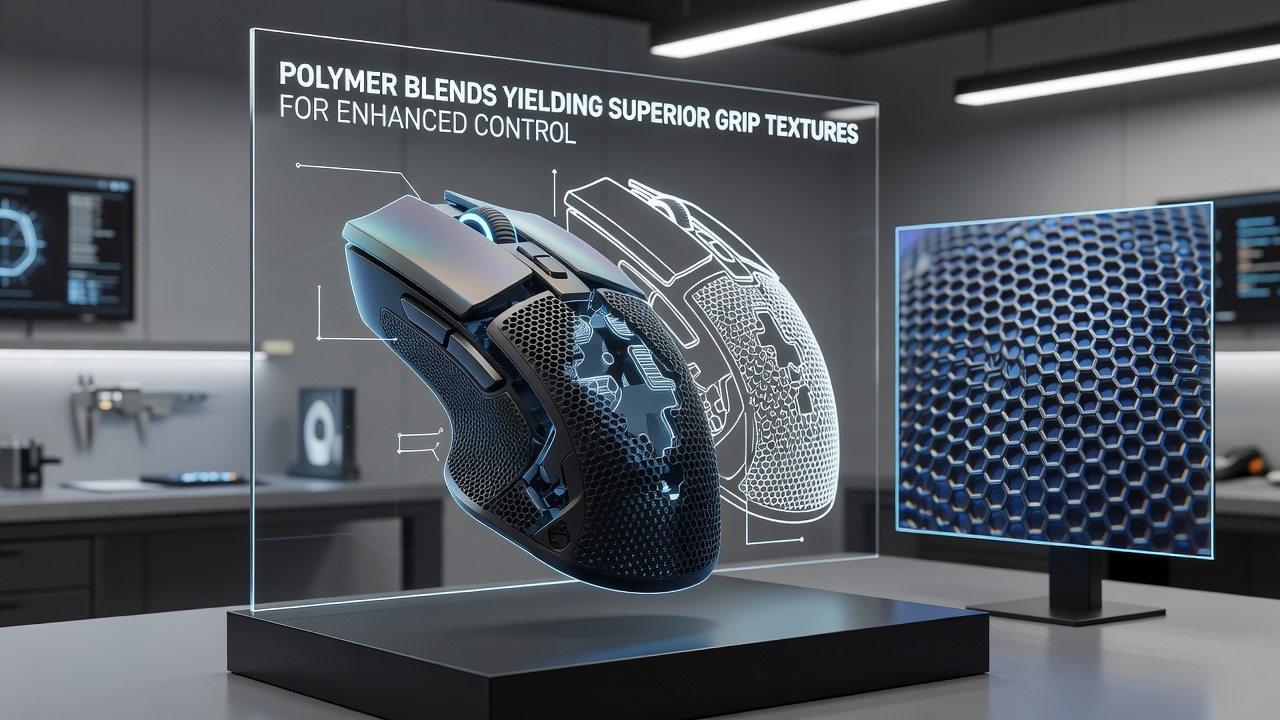
Additional testing protocols involve cyclic loading machines that simulate 50,000 click and swipe cycles, after which surface roughness profiles remain within 5 percent of initial values for optimized blends. Manufacturers document these results in technical specifications released alongside new product lines, and tournament organizers in North America and Oceania have begun specifying material requirements in equipment approval lists to ensure uniformity across competitors.
Integration with Sensor and Form Factor Advances
Pointing device designers pair polymer grip layers with optical or magnetic sensors positioned at optimal distances from textured contact points, and this combination maintains signal integrity while the outer surfaces provide mechanical stability. In June 2026 several prototype models debuted at a materials technology exhibition in Singapore, showcasing multi-shot molding techniques that embed conductive traces within the polymer matrix for seamless integration with onboard electronics.
Supply chain analyses from European trade organizations indicate that sourcing bio-derived polymer precursors has increased, which reduces dependency on petroleum-based feedstocks without altering the mechanical properties required for competitive use. Observers note that calibration routines in firmware now account for slight variations in grip compression, allowing software to normalize input curves across different user hand sizes and grip styles.
Future Developments in Surface Engineering
Academic papers published through collaborative networks between Australian and Japanese universities explore gradient polymer structures that transition from rigid cores to soft outer layers in single molding cycles, and initial prototypes demonstrate further reductions in required grip force during precision tasks. These approaches build on existing commercial blends while introducing nano-scale surface patterning achieved through laser ablation post-processing.
Regulatory bodies in the European Union have issued guidelines on chemical migration limits for consumer electronics materials, and manufacturers have reformulated several polymer lines to meet updated thresholds while preserving the friction and wear characteristics essential for esports applications. Continued monitoring of field performance data from regional circuits provides feedback loops that guide iterative improvements in blend ratios and additive packages.
Conclusion
Polymer blend technologies continue to advance grip performance on competitive pointing devices through systematic refinement of material properties and manufacturing methods, and the resulting textures support consistent control across diverse playing conditions. Ongoing research and production scaling ensure these components remain integral to hardware used in professional environments.