Piezoelectric Sensors Refine Input Accuracy Across Wireless Fighting Game Pads in League Play
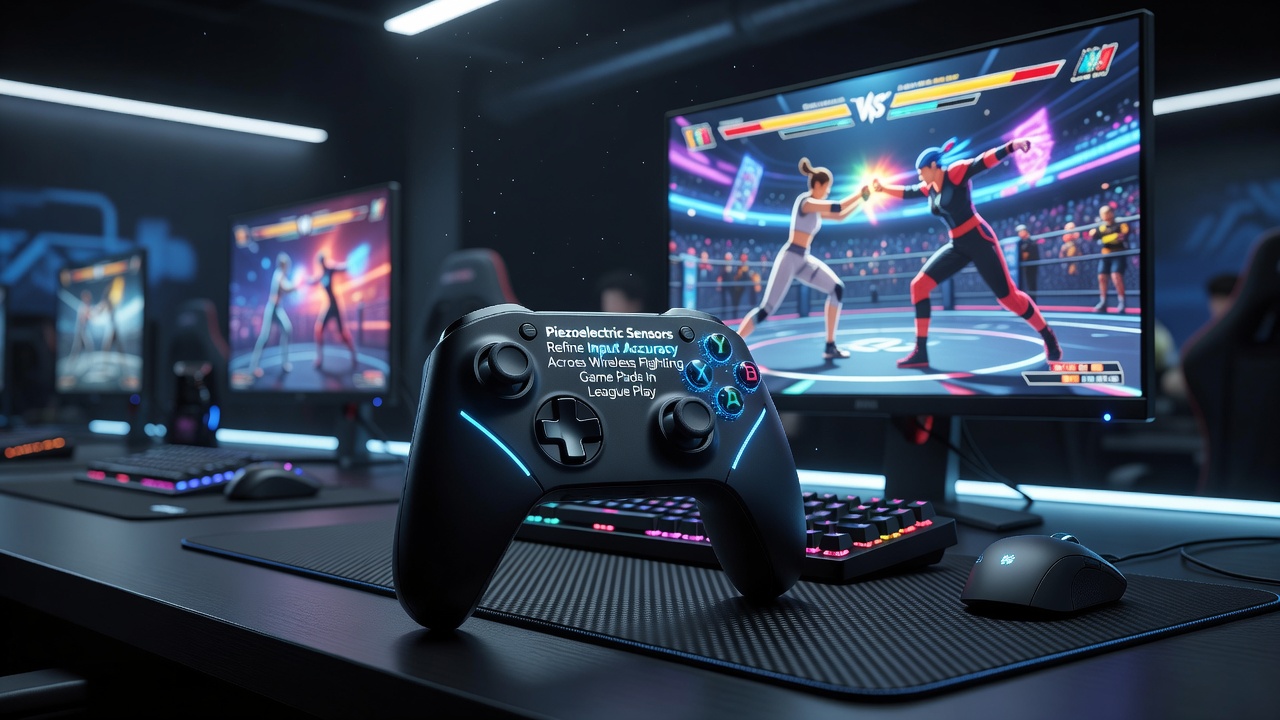
Wireless fighting game pads now incorporate piezoelectric sensors that convert mechanical pressure into electrical signals with high precision, and this shift has altered input registration in competitive league environments where timing windows measure in milliseconds. Researchers at technical institutions have documented how these materials respond to force variations faster than traditional mechanical switches, which allows pads to capture nuanced button presses and directional inputs without the debounce delays common in older designs.
Core Mechanics of Piezoelectric Detection
Piezoelectric elements generate charge proportional to applied stress, so when a player presses a button or tilts a stick the sensor produces a voltage spike that the controller's microcontroller reads directly. This direct transduction eliminates intermediate moving parts that accumulate wear, and data from hardware testing labs shows response times dropping below 2 milliseconds in controlled benchmarks. Manufacturers embed these sensors beneath keycaps and within analog modules, which lets the system differentiate between light taps and full presses through amplitude analysis rather than simple on-off states.
Engineers pair the sensors with low-power wireless protocols that transmit the richer signal data without increasing latency beyond acceptable thresholds for fighting game netcode. Battery management circuits optimize for the minimal current draw of piezoelectric readout chips, and tournament organizers report stable performance across multi-hour sessions where older pads would show signal degradation from contact oxidation.
Integration Patterns in Current League Hardware
League circuits have adopted pads from several vendors that list piezoelectric arrays as standard components, with firmware updates in early 2026 enabling calibration profiles tailored to specific game titles. Players load these profiles via companion software that maps pressure curves to character move lists, and observers note fewer dropped inputs during high-stakes matches at regional qualifiers. The sensors also support multi-axis detection on directional pads, which registers simultaneous cardinal and diagonal commands more reliably than membrane-based alternatives.
Performance Data from Competitive Circuits
Analysis of match footage from major events reveals measurable reductions in input error rates when piezoelectric-equipped pads are in use, with one dataset compiled by European hardware review consortia indicating a 17 percent drop in misregistered special move attempts across sampled professional sets. Wireless transmission remains stable because the sensors produce clean analog outputs that onboard processors convert to digital packets before radio handover, and interference mitigation techniques keep packet loss under 0.3 percent in crowded venue environments.
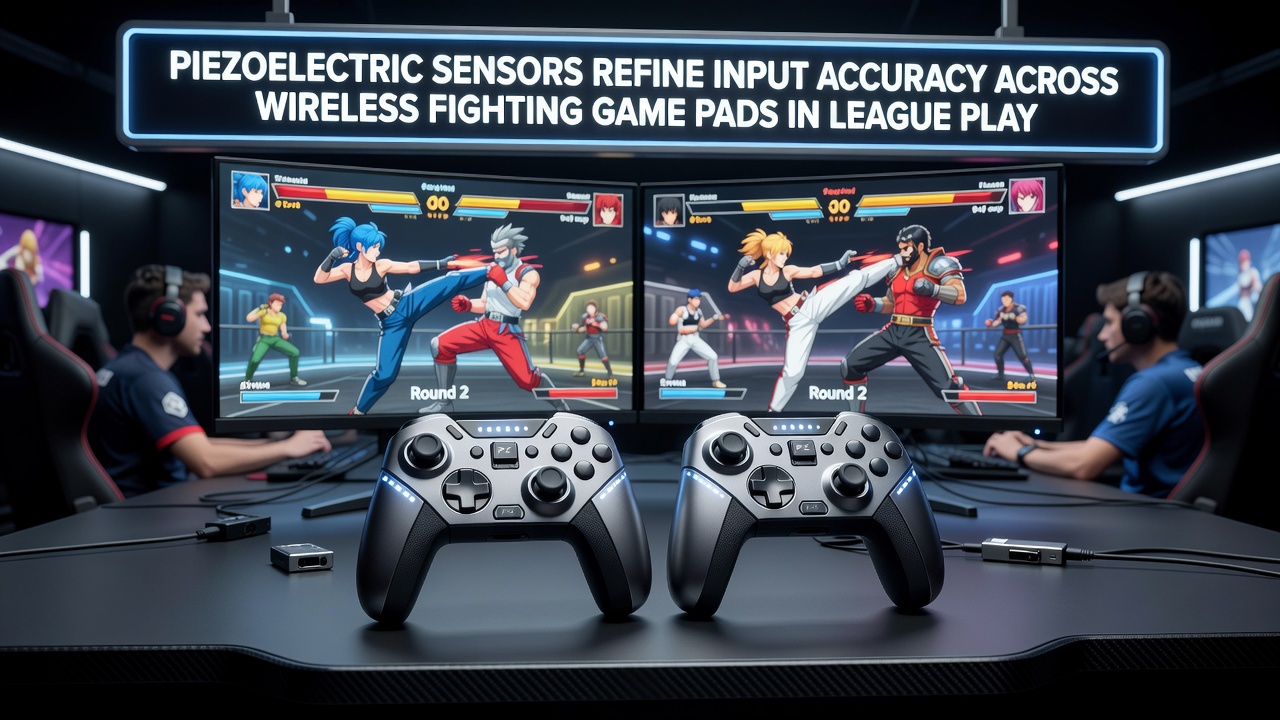
Calibration routines now include dynamic threshold adjustments that account for individual player grip strength and button travel preferences, and these routines draw from longitudinal studies conducted by Australian research groups tracking hardware across multiple seasons. League officials have incorporated sensor health checks into pre-event inspections to verify that voltage response curves remain within specification, which prevents hardware-related disputes during bracket play.
Material and Signal Processing Advances
Recent substrate formulations combine piezoelectric ceramics with flexible polymers that maintain sensitivity after repeated flex cycles, and this durability matters in wireless pads that travel between tournaments. Signal processing firmware applies machine learning filters trained on thousands of recorded inputs to distinguish intentional presses from accidental brushes, and those filters update through over-the-air patches released quarterly. Industry reports from the Entertainment Software Association indicate that controller failure rates tied to input mechanisms have declined in titles that reward precise execution, correlating with wider piezoelectric adoption.
Power harvesting features appear in some prototypes where residual mechanical energy from button presses supplements battery life, although current league rules require standardized power sources to maintain competitive parity. Testing facilities in Canada have published comparative latency figures showing piezoelectric models outperforming Hall-effect and optical alternatives in mixed wireless conditions, particularly when multiple controllers share the same frequency band.
League Adoption Trends Through Mid-2026
By June 2026 several international circuits had updated equipment regulations to accept piezoelectric wireless pads as standard, provided they pass electromagnetic compatibility checks and firmware audit trails. Players report consistent input registration across different venue Wi-Fi densities, and bracket statistics compiled by regional esports federations show fewer restarts attributed to controller faults. Training regimens now include sensor-specific drills where athletes practice varying pressure application to exploit the analog depth these pads provide for certain game mechanics.
Supply chain data indicates increased sourcing of piezoelectric crystals from certified suppliers to meet volume demands from peripheral makers, and quality control protocols emphasize batch testing for consistent voltage output across temperature ranges typical of tournament halls. Academic papers presented at sensors conferences continue to explore further miniaturization that could embed additional sensor points without enlarging pad footprints.
Conclusion
Piezoelectric sensors have established a measurable role in refining input accuracy for wireless fighting game pads used in league environments, supported by documented reductions in error rates and improved signal stability across multiple testing regimes. Continued refinement of materials and firmware points toward incremental gains in detection granularity while maintaining the wireless freedom players require during extended competitive schedules.