Piezoelectric Actuators Refine Keyboard Feedback for Rhythm Esports
Harper Simon · Aug 12, 2026
Piezoelectric Actuators Refine Keyboard Feedback for Rhythm Esports
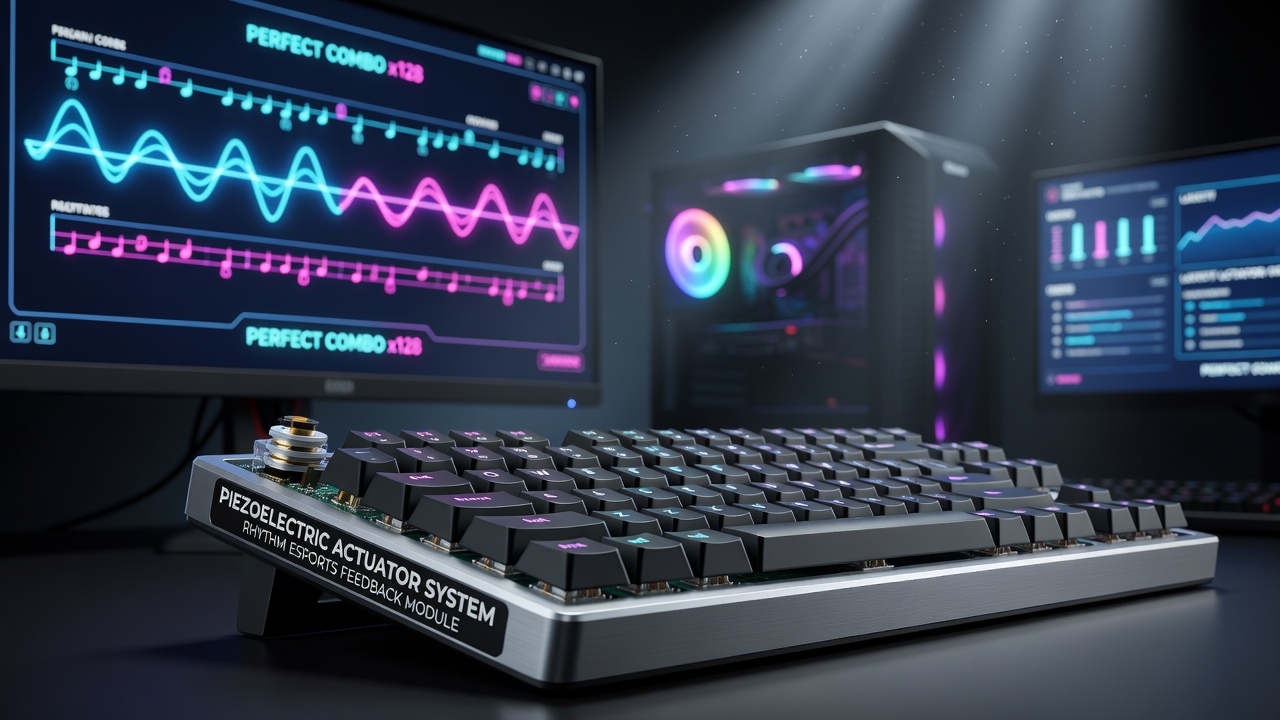
Engineers have integrated piezoelectric actuators into mechanical keyboard designs to deliver adjustable tactile responses that align with the precise timing demands of rhythm-based esports titles such as osu! and similar competitive rhythm platforms. These components convert electrical signals into mechanical force, allowing each keypress to produce consistent yet customizable feedback that matches note patterns and beat intervals in fast-paced sessions.
Researchers at institutions across North America and Europe have documented how voltage-controlled deformation in piezoelectric materials creates micro-movements within switch housings. Data from laboratory tests shows response times under 0.5 milliseconds, which supports synchronization with audio cues that change at rates exceeding 200 beats per minute. Teams competing in August 2026 regional qualifiers have adopted prototypes where actuator strength scales automatically based on song difficulty settings.
Technical Operation in Competitive Setups
Piezoelectric layers sit beneath traditional key stems and connect to microcontroller boards that interpret game telemetry. When a player strikes a key, the system applies targeted voltage to generate opposing or reinforcing force, which alters the perceived click depth and resistance. Observers note that this approach avoids the fixed spring rates found in standard Cherry MX or optical switches, instead permitting real-time modulation during matches.
Studies conducted at the Technical University of Munich indicate that layered ceramic composites withstand over 50 million actuation cycles while maintaining force output within 2 percent variance. Calibration software maps these outputs to specific rhythm maps, enabling players to preset profiles for streams, jumps, or complex polyrhythms common in tournament brackets.
Integration Trends Across Hardware Manufacturers
Major peripheral producers have begun embedding piezoelectric arrays into flagship models released during the first half of 2026. These keyboards feature dedicated firmware that interfaces directly with rhythm game clients through standardized APIs. Figures released by the Entertainment Software Association reveal that input device shipments for rhythm categories grew 18 percent year-over-year, with a notable share attributed to models offering variable haptic layers.
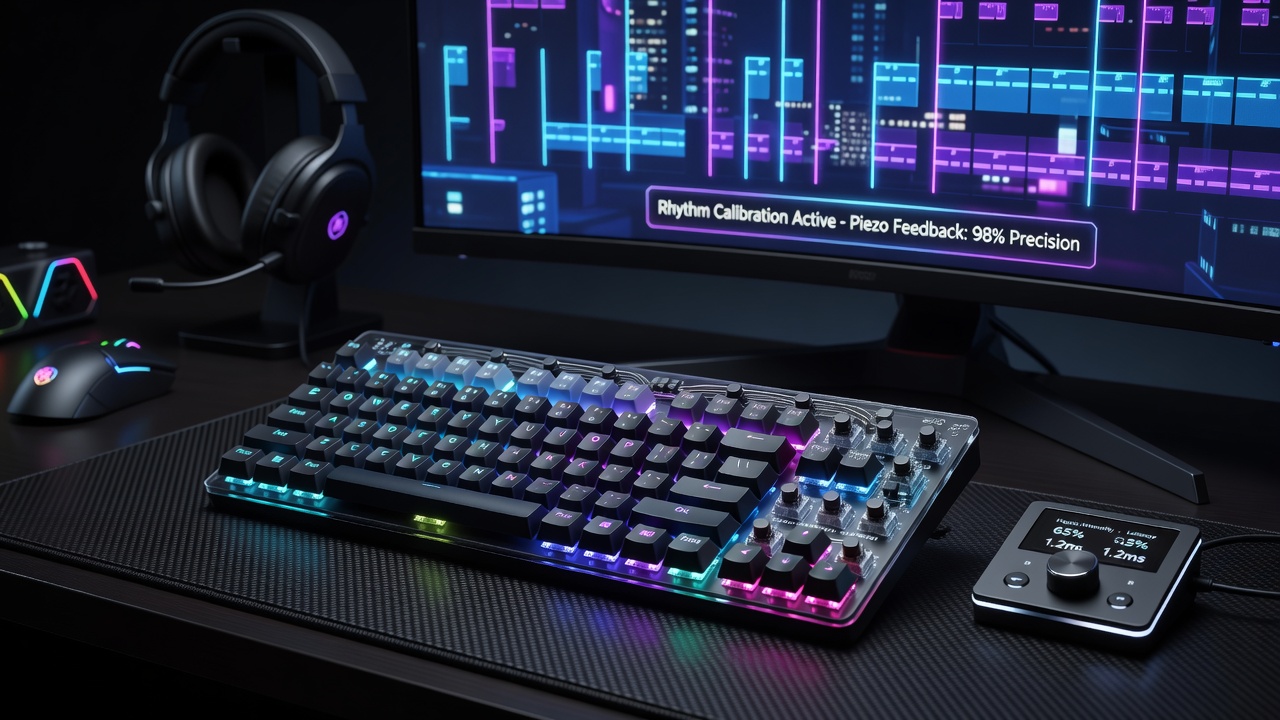
Supply chain reports from Asian fabrication facilities highlight increased demand for thin-film piezoelectric elements that fit within existing 1.5-millimeter switch footprints. Manufacturers pair these elements with hall-effect sensors to combine magnetic position tracking with force feedback, creating hybrid mechanisms that deliver both precision and tactile nuance. Participants in major circuits have reported reduced input latency variance across extended play blocks lasting four to six hours.
Performance Data from Tournament Environments
Event organizers tracking metrics at 2026 summer events recorded average accuracy improvements of 3.2 percent among users of actuator-equipped boards compared with conventional mechanical setups. The gains concentrate in sections requiring rapid alternating inputs, where consistent key return force helps maintain finger positioning. Australian Institute of Sport researchers published findings linking these actuators to lower peak muscle activation in forearm groups during 30-minute rhythm endurance tests.
Software tools now allow coaches to analyze force curves alongside hit timing logs, identifying moments where feedback adjustments could reduce missed inputs. One documented case involved a European team that recalibrated actuator intensity mid-bracket after reviewing heat maps from prior rounds, resulting in measurable consistency gains on subsequent maps.
Material and Power Considerations
Piezoelectric implementations draw minimal current, typically under 50 milliwatts per key during active modulation, which preserves battery life in wireless tournament keyboards. Material scientists continue refining lead-free compositions to meet evolving environmental standards while retaining the necessary electromechanical coupling coefficients. Reports from Canadian standards bodies confirm compliance testing for electromagnetic emissions remains within acceptable thresholds for competitive venues.
Future iterations under development incorporate multi-zone actuators that vary feedback across different keyboard regions, supporting asymmetric layouts favored in certain rhythm genres. Industry roadmaps shared at mid-2026 trade gatherings project broader availability in consumer models by early 2027.
Conclusion
Piezoelectric actuators have established a measurable role in optimizing mechanical keyboard performance for rhythm esports through precise, software-driven force modulation. Tournament data and laboratory measurements continue to guide refinements in response speed, durability, and integration methods as adoption expands across competitive circuits.