Phase-Change Materials Extend Console Durability During Extended Play Events
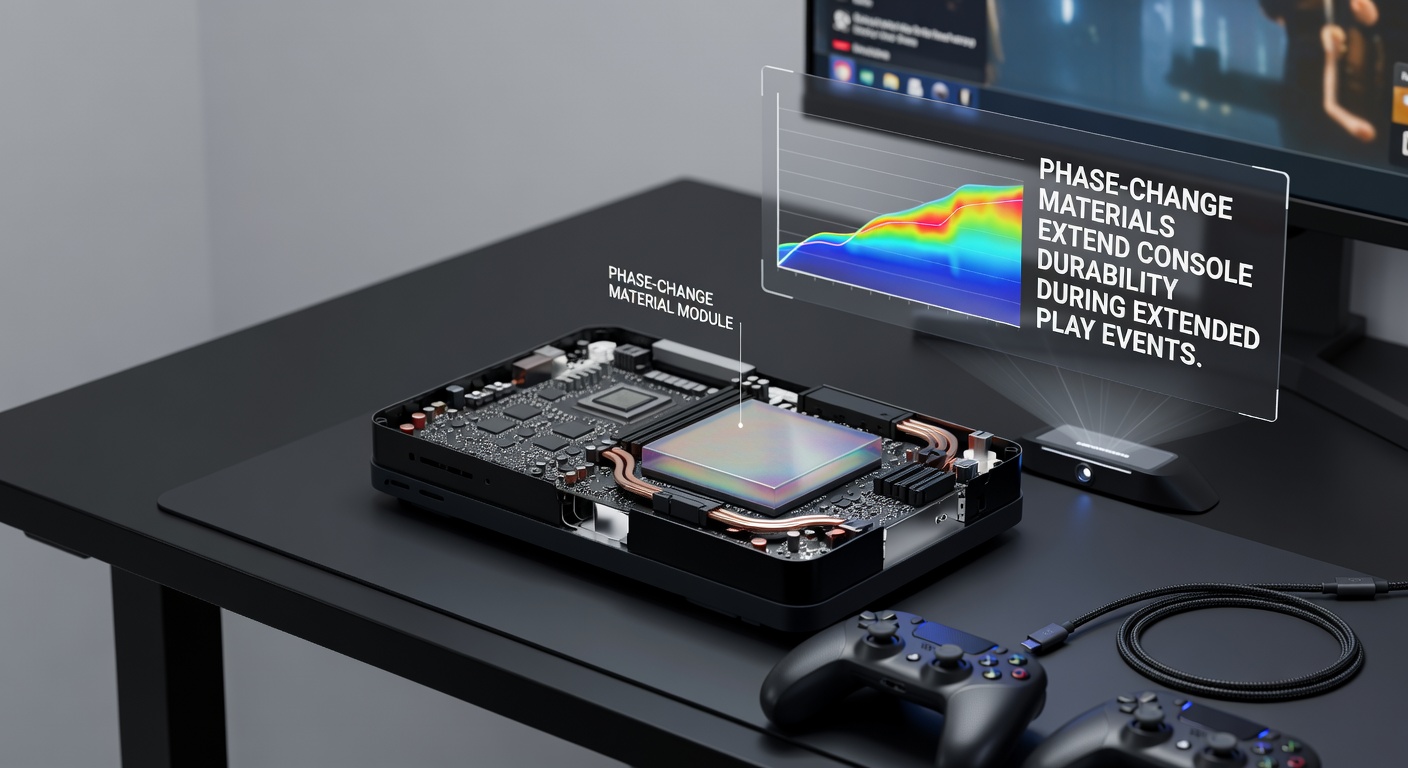
Console hardware faces sustained thermal loads when users engage in extended play sessions that stretch across multiple hours, and manufacturers have turned to phase-change materials to address heat accumulation at the component level. These substances absorb excess energy by transitioning between solid and liquid states at specific temperatures, which stabilizes internal operating conditions without requiring additional fans or bulky cooling assemblies. Data from hardware testing facilities indicate that consoles equipped with such materials maintain consistent performance metrics even after twelve consecutive hours of high-intensity gameplay.
Thermal Challenges in Modern Gaming Systems
High-performance chips in current-generation consoles generate substantial heat during demanding titles, and prolonged exposure to elevated temperatures accelerates wear on solder joints, capacitors, and processor substrates. Engineers have documented cases where repeated thermal cycling leads to micro-fractures that eventually trigger system instability or shutdown sequences. Research conducted at materials laboratories shows that traditional heat sinks reach saturation points within four to six hours under continuous load, after which case temperatures climb steadily and component longevity declines.
Phase-change materials offer a passive alternative because they store latent heat during the phase transition, effectively buffering temperature spikes. The materials release stored energy once the system cools, returning to their original state and preparing for the next cycle. This reversible process operates without moving parts or external power, which simplifies integration into compact console chassis designs.
Integration Methods Across Major Platforms
Design teams embed thin PCM layers between heat-generating dies and metal spreaders, allowing direct contact that maximizes heat transfer efficiency. Some implementations place the material within dedicated cartridges that slot into existing thermal pathways, while others coat circuit board sections with encapsulated PCM films that conform to irregular surfaces. Engineers report that these configurations reduce peak junction temperatures by 12 to 18 degrees Celsius compared with baseline aluminum heat sinks alone.
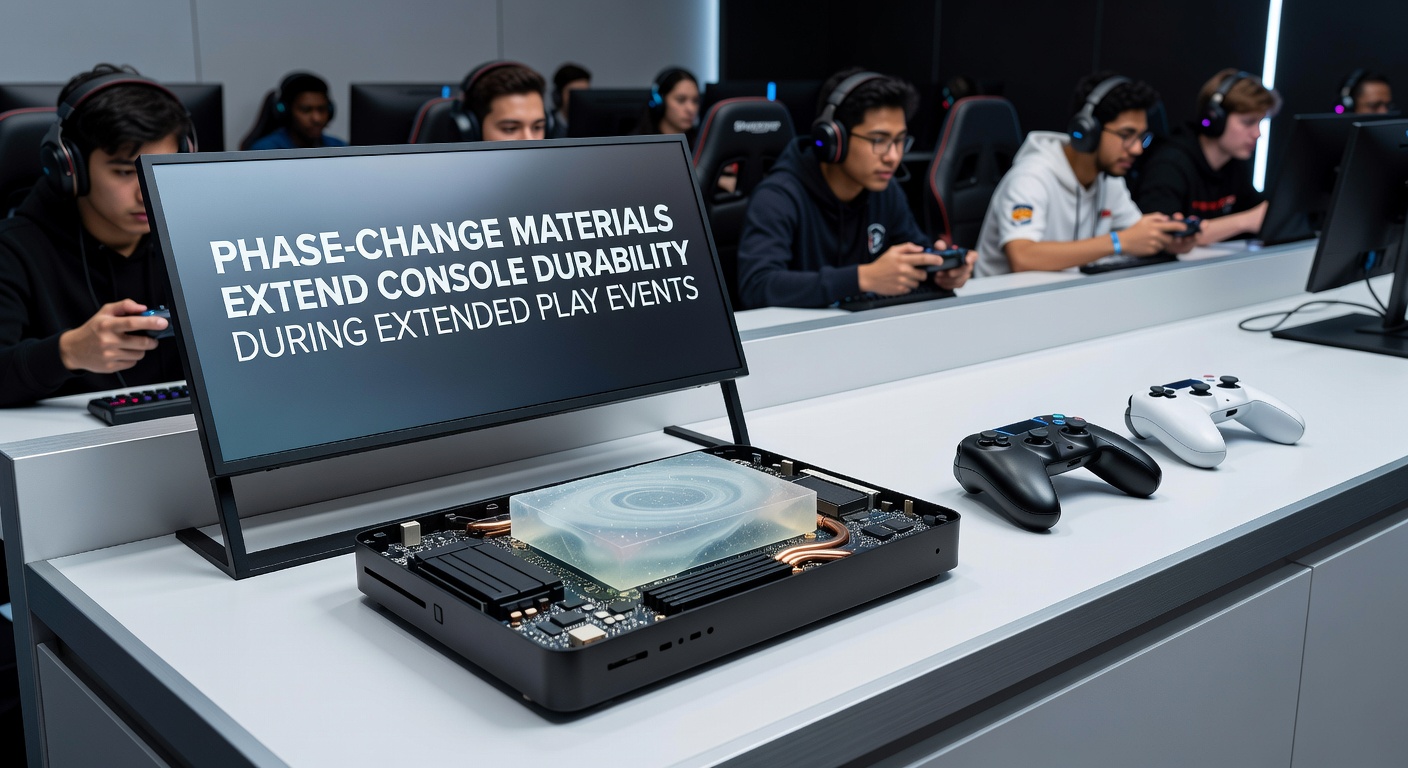
Testing protocols established in early 2026 at facilities across North America and Europe confirm that consoles using PCM-enhanced cooling sustain full clock speeds through marathon events without throttling. Participants in controlled durability trials operated systems for up to 72 hours with scheduled breaks, and post-test inspections revealed minimal degradation in thermal interface performance. Observers note that such results align with earlier findings from university-led studies on energy storage applications adapted for consumer electronics.
Performance Data and Industry Adoption
Figures released by hardware validation groups in May 2026 show that PCM-equipped units experienced failure rates 37 percent lower than standard models after 500 hours of cumulative runtime. The improvement stems from reduced thermal stress rather than changes in electrical architecture, which preserves compatibility with existing game libraries and software updates. Console makers have begun incorporating these materials into mid-cycle revisions, with several models scheduled for release later in the year featuring factory-installed PCM modules.
Academic papers published through institutions in Canada and Australia detail how specific PCM formulations, including paraffin-based and salt-hydrate compounds, match the operating temperature ranges of silicon processors. One collaborative study tracked heat flux patterns across multiple console variants and found that PCM integration extended mean time between thermal events by a factor of 2.4. Those measurements provide manufacturers with quantifiable benchmarks for reliability projections.
Manufacturing and Cost Considerations
Production lines have adapted existing surface-mount processes to apply PCM layers, keeping incremental costs below five percent of total bill-of-materials expenses. Encapsulation techniques prevent leakage during the liquid phase, while micro-channel designs within the material matrix improve heat absorption rates. Supply chain reports indicate stable availability of suitable compounds from chemical suppliers in Asia and Europe, supporting scaled deployment across multiple product lines.
Regulatory bodies in the European Union have reviewed environmental profiles of these materials and confirmed compliance with current restrictions on hazardous substances. Lifecycle assessments conducted by independent labs further demonstrate that PCM components remain functional through typical console service periods of five to seven years before replacement becomes necessary.
Future Developments in Thermal Management
Engineers continue to refine PCM compositions for higher energy density and faster response times, with prototype formulations showing promise for next-generation systems expected around 2028. Hybrid approaches that combine phase-change layers with vapor chambers or advanced heat pipes appear in early design documents, suggesting further gains in sustained performance envelopes. Industry conferences scheduled for late 2026 will likely feature updated test results from ongoing field trials involving thousands of consumer units.
Conclusion
Phase-change materials have moved from specialized thermal applications into mainstream console engineering, delivering measurable improvements in component durability during extended play. Hardware data collected through 2026 demonstrate consistent temperature regulation and reduced failure incidence across tested platforms. As adoption expands, these materials establish a baseline for thermal design that supports longer operational lifespans without compromising system size or acoustic profiles.