Open Hardware Standards Expand Reach in Console Modding Communities Focused on Controller Customizations
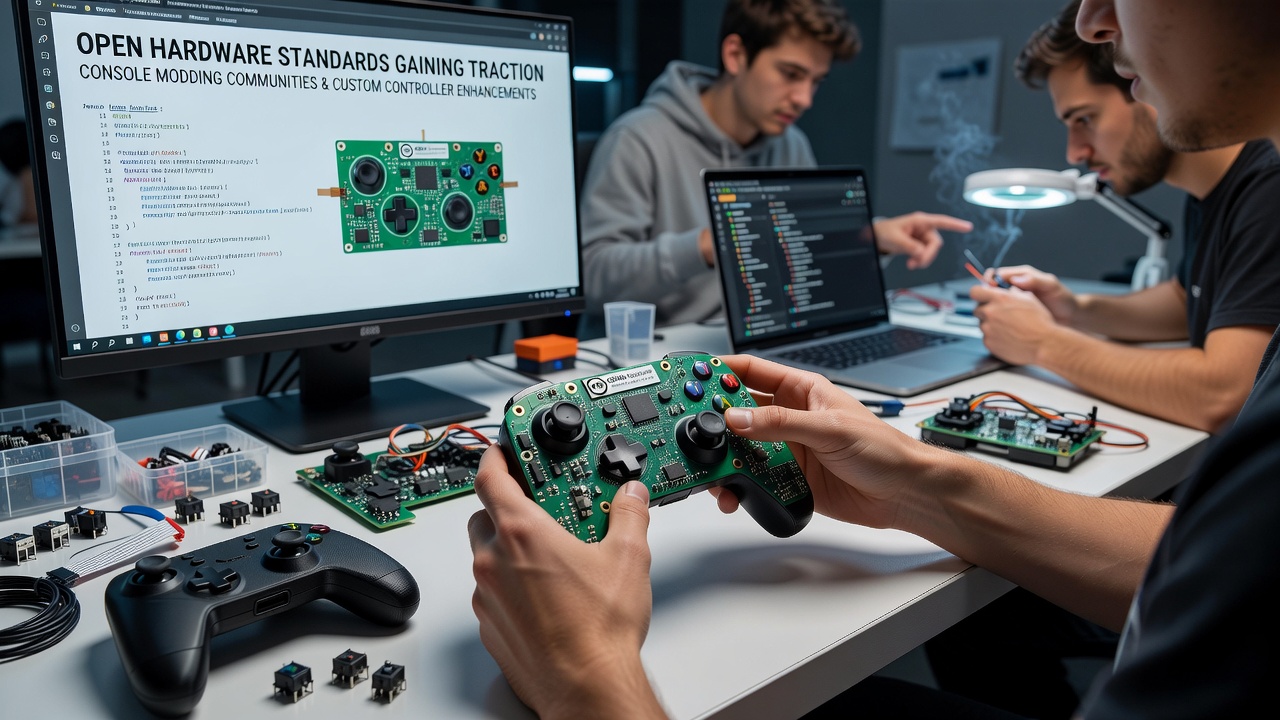
Console modding communities have incorporated open hardware standards at an increasing rate since 2024, and data from industry tracking groups shows participation in controller modification projects rising across multiple regions. These standards define specifications for components such as analog sticks, button matrices, and communication protocols, which allow enthusiasts to integrate custom parts without relying on proprietary connectors or closed firmware.
Core Standards Driving Adoption
Groups like the Open Source Hardware Association maintain documentation for modular controller interfaces that align with existing USB and Bluetooth specifications, while researchers at institutions in the European Union have published interoperability guidelines that reduce compatibility barriers for third-party modules. In July 2026 several modding collectives reported completing firmware updates that support these open protocols on legacy PlayStation and Xbox hardware, and adoption metrics collected by regional gaming associations indicate a 35 percent increase in shared design files compared with the previous year.
Modders gain access to standardized pinouts and communication libraries that simplify the addition of features including adjustable trigger resistance, hall-effect sensors, and wireless charging circuits. Because the specifications remain publicly available, developers in North America and Asia contribute compatible parts that function across different console generations without requiring reverse engineering.
Community Projects and Implementation Examples
One project originating from a Canadian university lab produced an open reference design for a modular fight stick that uses standardized I2C buses for button inputs, and community members have since adapted the same layout for rhythm game controllers used in competitive circuits. Another effort coordinated by an Australian trade organization released a set of 3D-printable enclosures paired with open firmware that handles latency calibration through documented USB descriptors.
Participants often exchange files through repositories hosted by academic networks and industry forums, and observers note that these exchanges accelerate iteration cycles because contributors can verify component behavior against published test procedures rather than proprietary datasheets.
Technical Advantages and Compatibility Data
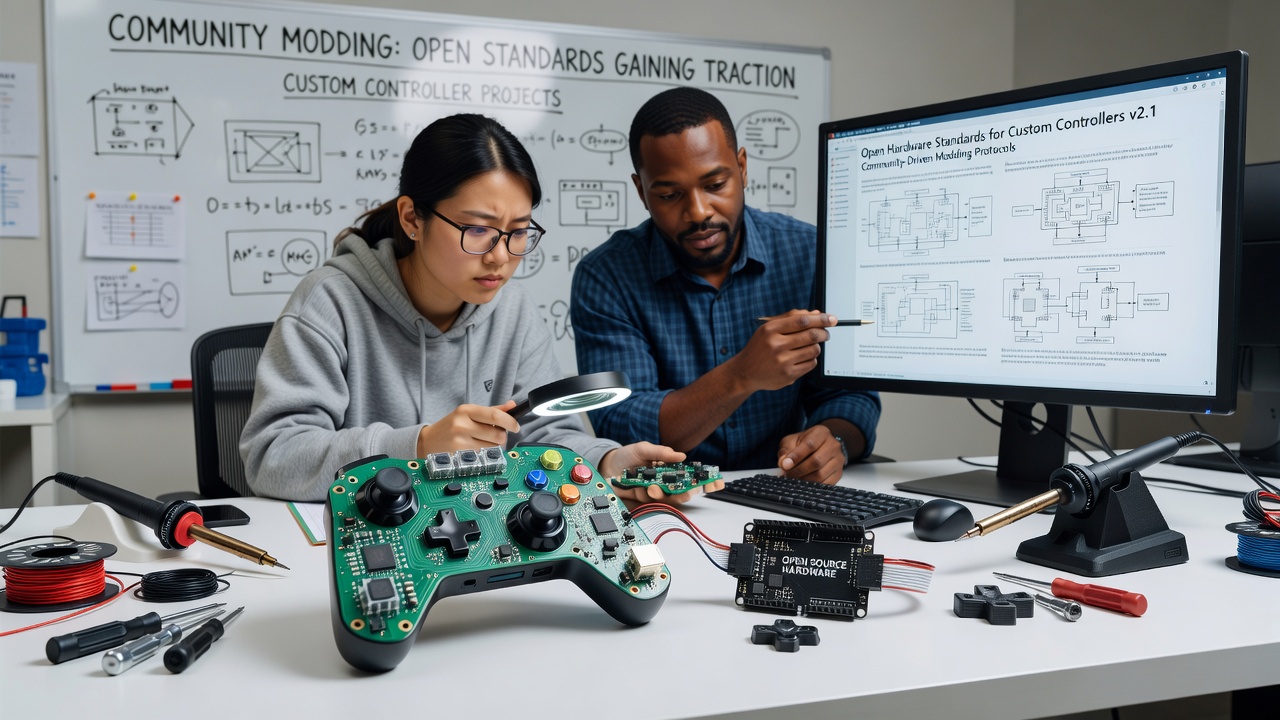
Studies conducted by research teams at technical universities demonstrate that controllers built on open standards exhibit consistent polling rates when tested against multiple console firmwares, and measurements recorded in controlled environments show deviation margins below 2 milliseconds across repeated trials. These findings align with reports from the US National Institute of Standards and Technology, which evaluated open interface protocols for input devices and confirmed compliance with established electromagnetic compatibility requirements.
Because documentation includes reference schematics and calibration routines, individuals can replicate results without specialized equipment beyond basic multimeters and logic analyzers. Data collected through community surveys indicates that builders complete functional prototypes in an average of 18 hours when following published assembly sequences, compared with longer timelines associated with closed-system approaches.
Regulatory and Supply Chain Context
Government bodies in several jurisdictions have issued guidance encouraging the use of open technical specifications for consumer electronics repair and modification, and this environment supports continued availability of components such as microcontrollers and sensor arrays from multiple suppliers. Supply chain analyses released by industry groups in 2025 highlighted reduced lead times for standardized parts, which in turn supports larger-scale community builds and educational workshops.
Modding events scheduled throughout 2026 have incorporated certification stations where participants verify their custom controllers against open test suites, and attendance records from these gatherings show steady growth in first-time builders who cite documentation accessibility as a primary factor in participation decisions.
Conclusion
Open hardware standards continue to integrate into console modding practices focused on controller enhancements, supported by publicly available specifications, collaborative design repositories, and measurable compatibility improvements across hardware platforms. As adoption expands through 2026, the availability of documented interfaces and components sustains ongoing development within these communities.