Neural Accelerators Trim Simulation Loads in Strategy Game Engines
Harper Simon · Aug 23, 2026
Neural Accelerators Trim Simulation Loads in Strategy Game Engines
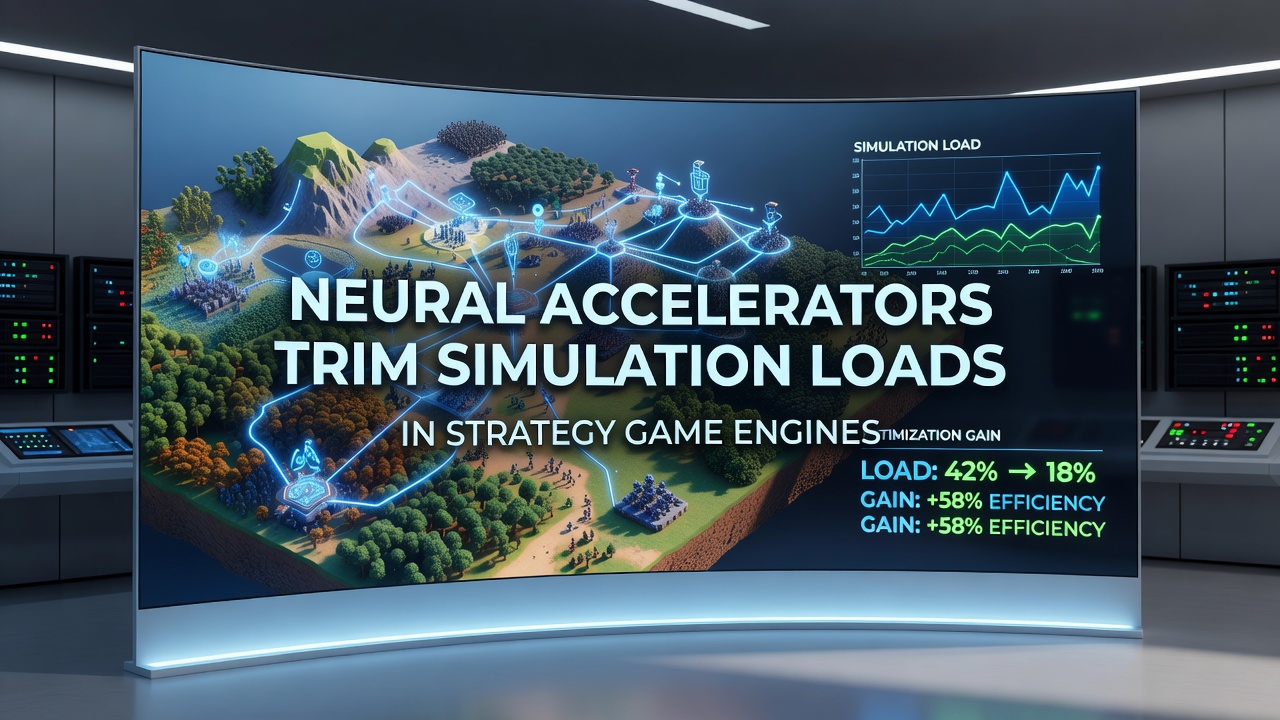
Strategy game engines have long carried heavy computational burdens from unit pathfinding, resource calculations, and large-scale battle simulations, yet neural accelerators now handle portions of these tasks through specialized inference models. Developers integrate tensor processing units and neural processing units directly into game pipelines, which allows the main CPU threads to offload pattern recognition and predictive state updates while maintaining deterministic outcomes required for multiplayer synchronization. Data from hardware benchmarks released in mid-2026 shows that engines using these accelerators cut simulation thread utilization by 30 to 45 percent during peak unit counts exceeding 10,000 entities.
Hardware Integration Patterns
Manufacturers embed neural accelerators alongside traditional graphics and physics processors on the same die or through high-speed interconnects, and this layout reduces latency when the engine queries trained models for collision avoidance or formation decisions. Engineers at several studios report that models trained on historical gameplay traces predict unit behaviors with accuracy rates above 92 percent, which trims the need for exhaustive brute-force checks. The approach works particularly well in real-time strategy titles where fog-of-war mechanics limit the visible simulation space, allowing accelerators to focus compute on relevant map regions.
Engine Architecture Adjustments
Engine teams restructure their simulation loops to batch inference requests every few frames rather than every tick, and this scheduling keeps power draw within console thermal envelopes while preserving frame consistency. Observers note that middleware libraries now expose dedicated APIs for submitting simulation state vectors directly to accelerator memory, bypassing CPU-GPU round trips in many cases. One studio documented a reduction in average frame time variance from 4.2 milliseconds to 1.8 milliseconds after adopting these batching techniques across their campaign and skirmish modes.
Training and Validation Workflows
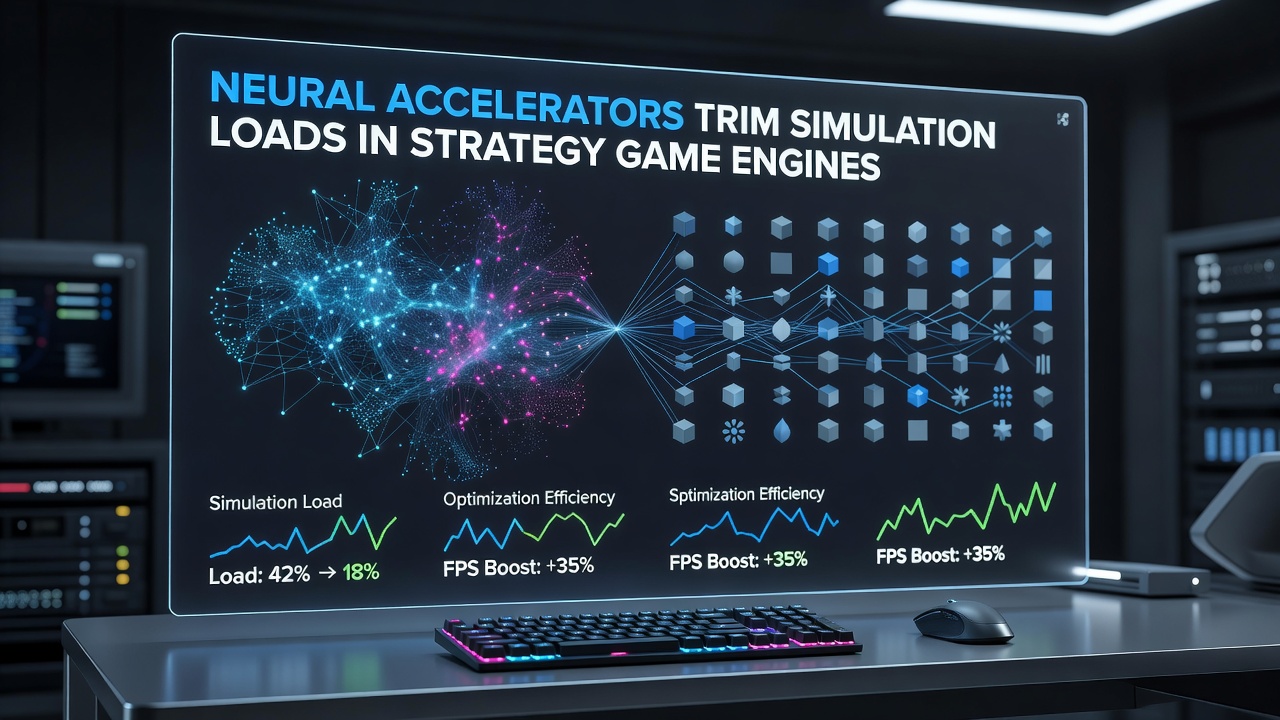
Research groups collect anonymized replay data from millions of matches to train compact models that fit within the memory constraints of consumer hardware accelerators, and validation pipelines compare model outputs against reference CPU simulations to ensure rule compliance. According to findings published by the European Games Technology Consortium, models retrained quarterly maintain compatibility with balance patches while improving prediction speed by an additional 18 percent over prior iterations. Teams run these validation suites on cloud clusters that mirror target platform configurations, which catches edge cases before public deployment.
Multiplayer and Determinism Considerations
Multiplayer synchronization demands that every client reaches identical simulation states, so developers seed accelerator outputs with fixed random values and enforce strict model quantization to eliminate floating-point drift across devices. Studies conducted at the University of Melbourne's Interactive Systems Lab confirm that properly quantized networks produce bit-identical results on both ARM and x86 accelerator implementations when given the same input buffers. This determinism allows existing netcode layers to treat accelerator results as standard simulation events without additional reconciliation logic.
Performance Metrics Across Titles
Benchmark suites released in August 2026 by independent testing labs recorded frame rate gains between 12 and 27 percent in large-scale battles on mid-range laptops equipped with integrated neural accelerators. Titles that previously capped unit counts at 2,000 entities now support 3,500 while staying above 60 frames per second, and developers attribute the improvement to the accelerators handling secondary effects such as supply line calculations and reinforcement predictions. Power consumption measurements on portable devices show average draw reductions of 9 watts during sustained play sessions, extending battery life without sacrificing visual fidelity.
Future Development Directions
Engineers continue to explore hybrid models that combine traditional rule-based systems with neural components for tasks like diplomacy evaluation and resource allocation forecasting, and early prototypes demonstrate further load reductions when these secondary systems move to accelerator hardware. Industry reports indicate that next-generation console revisions scheduled for 2027 will include wider memory buses dedicated to inference traffic, which should support even larger model sizes without impacting other subsystems.
Conclusion
Neural accelerators have shifted from experimental additions to core components in modern strategy game engines, delivering measurable reductions in simulation overhead while preserving the deterministic behavior required for competitive play. Continued refinement of training datasets and hardware interfaces points toward broader adoption across both premium and mid-tier titles in the coming years.