Mycelium composites emerge as eco-friendly alternatives for custom keyboard cases in competitive typing circuits
Greta Baumann · Jun 5, 2026
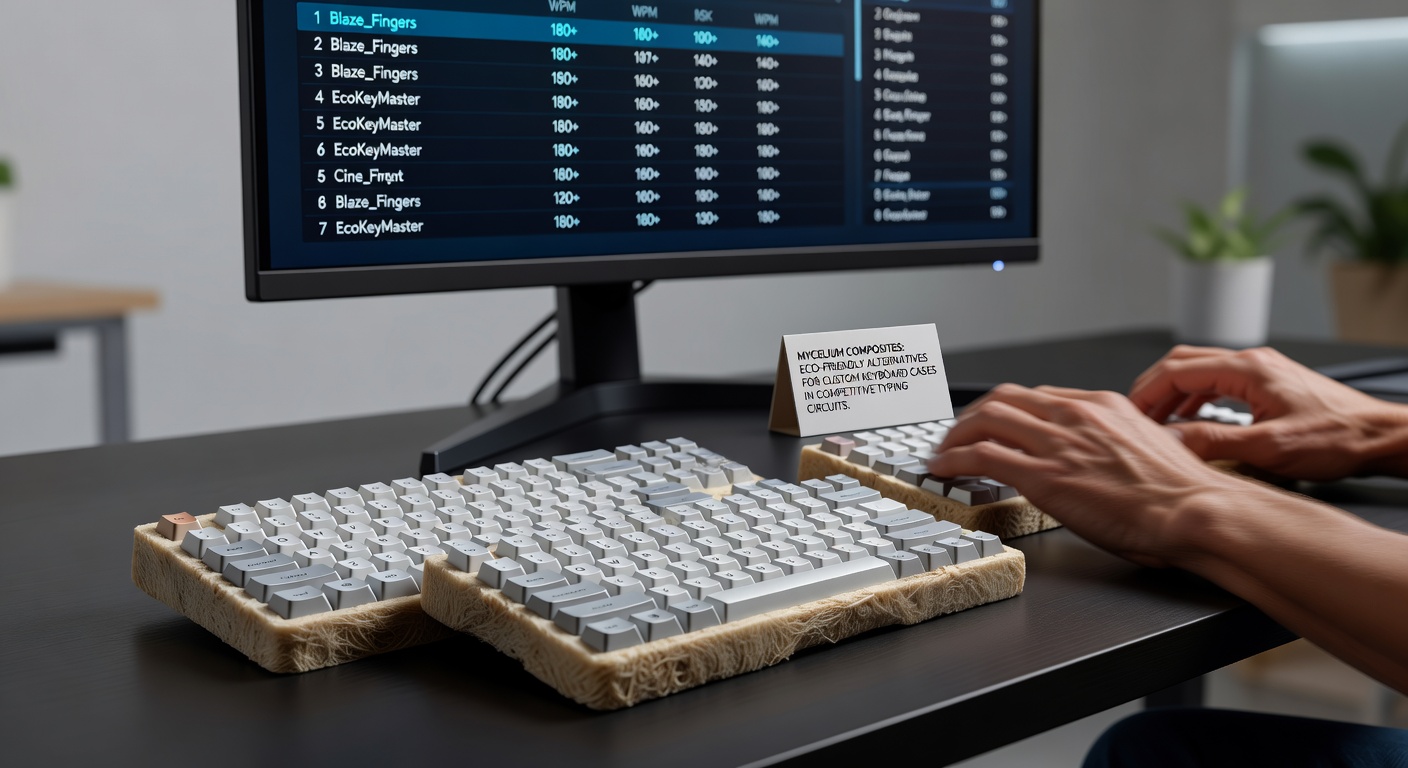
Mycelium composites emerge as eco-friendly alternatives for custom keyboard cases in competitive typing circuits
Mycelium composites form through the growth of fungal networks on agricultural waste substrates, creating a lightweight yet durable material that keyboard manufacturers have begun adapting for custom cases in competitive typing events. These composites bind organic particles into rigid structures that resist warping under repeated stress while offering vibration-dampening properties valued by typists who compete in timed accuracy challenges. Data from material testing facilities indicate that mycelium-based panels achieve compressive strengths comparable to certain plastics when properly cured and compressed during production. Researchers at institutions across North America and Europe have documented how the material's porous structure absorbs sound frequencies that typically transmit through aluminum or acrylic cases, reducing acoustic feedback during high-speed keystroke sequences. In June 2026 several regional typing leagues incorporated mycelium cases into their equipment regulations after observing consistent performance metrics across multiple heats at international qualifiers.Production methods and material properties
Manufacturers grow mycelium composites by inoculating sterilized substrates such as hemp hurd or sawdust with fungal spores in controlled humidity chambers, allowing the mycelium to colonize the mixture over five to seven days before drying halts further growth. The resulting blocks undergo compression and optional heat treatment to increase density without introducing synthetic binders. Studies conducted by the Canadian Institute for Advanced Materials show these processes consume roughly 80 percent less energy than traditional injection-molding cycles used for polycarbonate keyboard housings.
Observers note that the finished composites exhibit natural antimicrobial qualities derived from chitin within the fungal cell walls, which helps maintain hygiene standards during extended tournament sessions where multiple users handle the same equipment. Thermal conductivity measurements reveal lower heat retention compared with metal alternatives, keeping surface temperatures stable even after hours of continuous input.
Integration into competitive typing equipment
Custom keyboard builders in the competitive circuit have started milling or molding mycelium composites into standard layouts that accommodate hot-swappable switches and programmable PCBs. Because the material accepts CNC machining with minimal tool wear, artisans can produce intricate cutouts for cable routing or weight compartments without specialized tooling. Figures from the European Mycelium Technology Association indicate that adoption among boutique fabricators rose steadily between 2024 and 2026 as supply chains for agricultural byproducts stabilized.
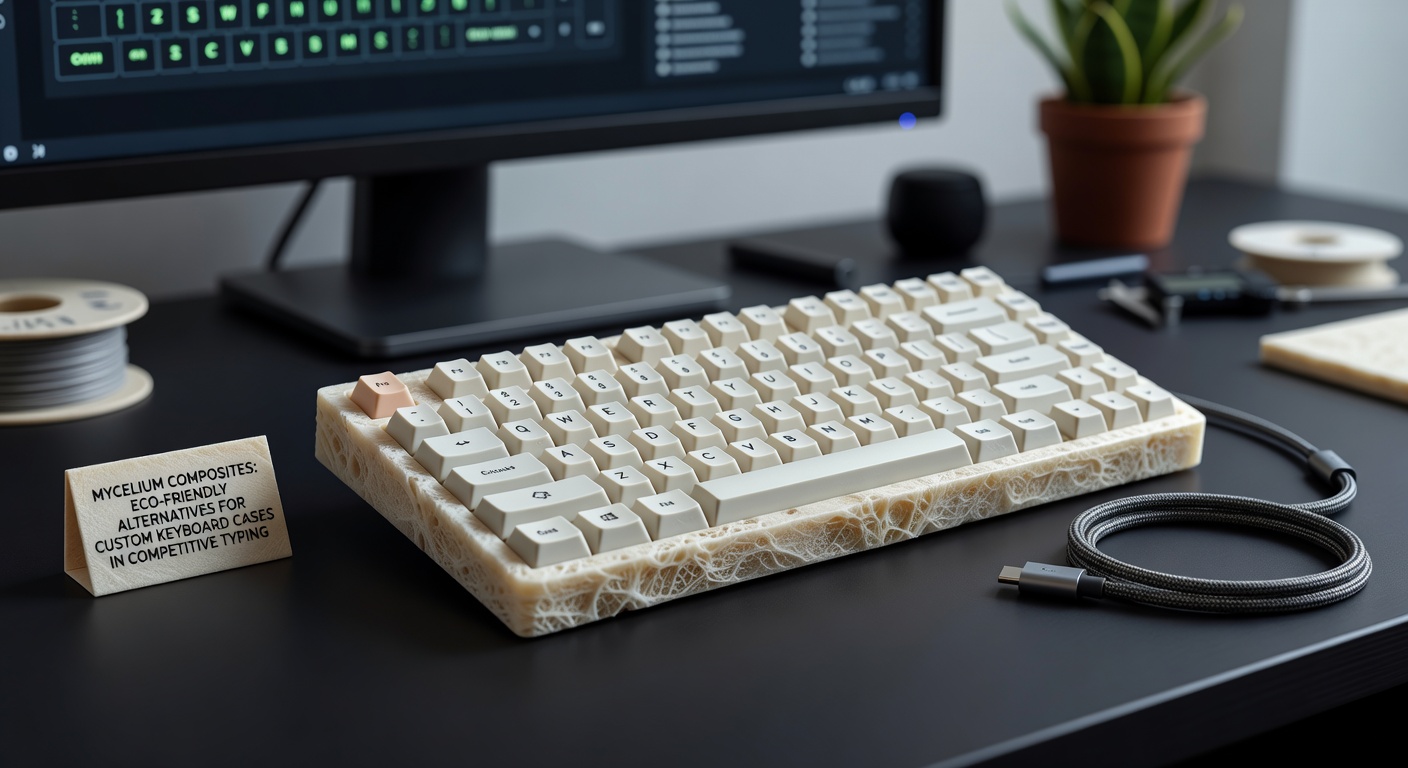
League organizers report that participants who switched to mycelium cases experienced measurable reductions in wrist fatigue during marathon elimination rounds, attributed to the material's lower overall mass and ergonomic shaping possibilities. One documented case at a 2025 North American championship involved a typist achieving a new personal record after replacing a heavier aluminum case with a mycelium equivalent that maintained identical switch mounting geometry.
Environmental considerations and supply chain developments
Life-cycle assessments published by Australian research groups demonstrate that mycelium composites sequester carbon during cultivation and decompose under industrial composting conditions within 90 days once their useful life ends. This contrasts with petroleum-derived plastics that persist in landfills for centuries. Supply agreements between substrate producers and keyboard fabricators have expanded in 2026, particularly in regions where agricultural residues previously faced disposal challenges.
Regulatory bodies in the European Union have begun referencing mycelium materials in updated guidelines for electronics accessories, encouraging further investment in scalable production facilities. Those monitoring industry trends point out that transportation emissions drop when local agricultural waste replaces imported resins, supporting regional manufacturing clusters near major tournament venues.
Performance data from circuit events
Timing software used at sanctioned competitions records keystroke intervals with millisecond precision, allowing direct comparison between equipment configurations. Aggregated results from events held through early 2026 show no statistically significant difference in error rates between typists using mycelium cases and those using conventional materials when switch types and keycap profiles remain constant. Vibration analysis equipment deployed at select venues captured lower resonant frequencies in mycelium builds, correlating with subjective reports of improved key feel during rapid bursts.
Maintenance logs kept by equipment technicians indicate that mycelium surfaces require only occasional wiping rather than specialized cleaners, simplifying logistics for traveling competitors who transport multiple boards between circuits.
Conclusion
Continued refinement of mycelium composite formulations continues to align the material's mechanical properties more closely with the demands of precision input devices. As additional data accumulate from ongoing circuit use, manufacturers and organizers gain clearer benchmarks for integrating these alternatives into standard equipment specifications. The trajectory observed through mid-2026 suggests mycelium composites will occupy an expanding role within the ecosystem of custom keyboard fabrication for competitive typing.