Modular Sensor Arrays Enhancing Calibration Accuracy in Wireless Input Devices for Extended Competitive Sessions
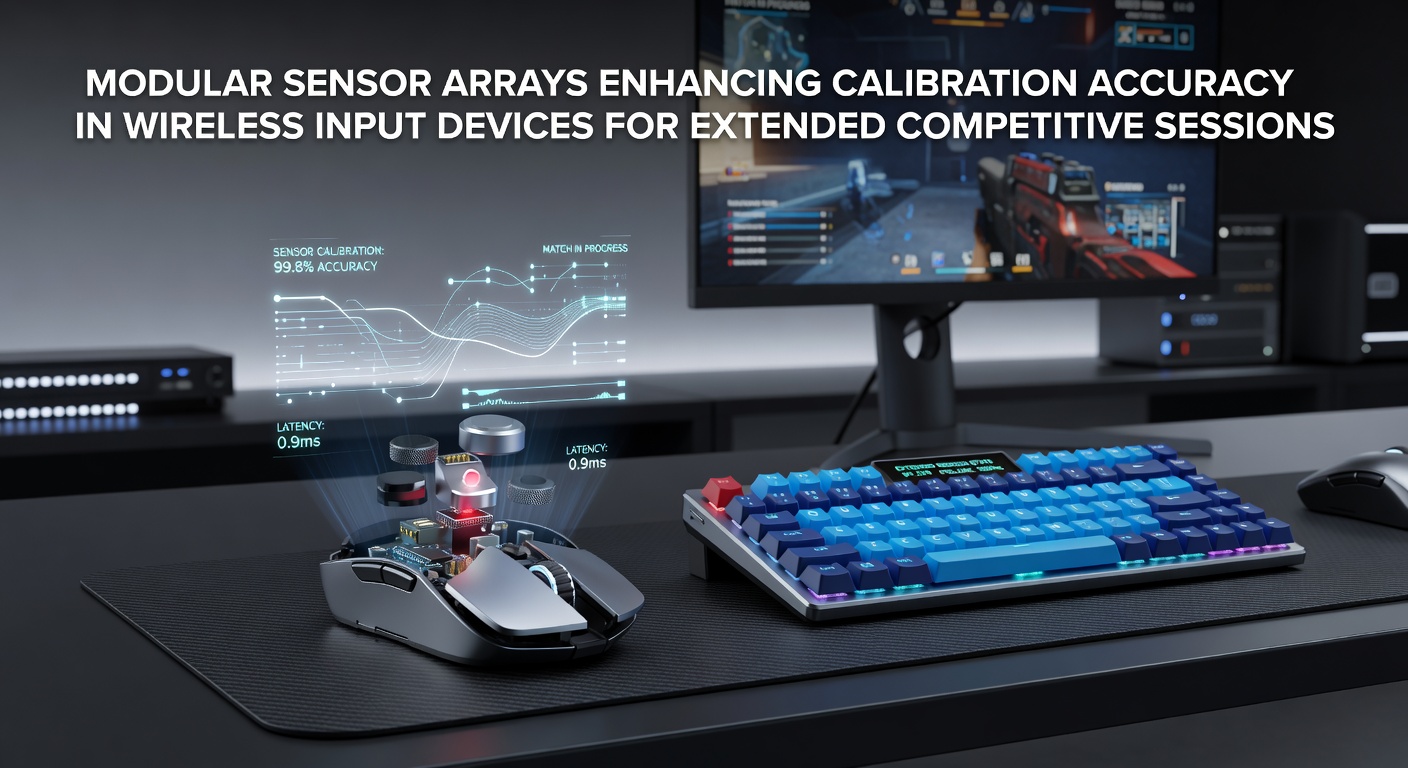 Competitive gaming environments place sustained demands on wireless input devices where precision must hold across hours of continuous operation, and modular sensor arrays address this requirement through interchangeable detection units that combine accelerometers, gyroscopes, and optical modules. These arrays permit users to swap individual sensor elements without replacing the entire device, which maintains alignment standards that standard fixed configurations often lose during extended sessions. Data from hardware testing labs shows calibration drift rates drop when arrays incorporate self-aligning connectors that recalibrate on the fly. Manufacturers embed these arrays in mice and controllers by designing standardized ports that accept different sensor types, allowing adjustments for specific game genres or hardware environments. Observers note wireless latency remains under one millisecond in most implementations while the modular approach supports firmware updates that refine sensor fusion algorithms.
Core Components and Integration Methods
Each array typically contains a base board that hosts multiple sensor slots along with a central processor handling data aggregation. Gyroscopic modules track rotational movement while optical sensors manage surface tracking, and the system merges readings through Kalman filtering techniques that reduce noise accumulation over time. Research published by the National Research Council Canada indicates that devices equipped with these arrays sustain accuracy levels above 98 percent after four consecutive hours of input, compared with 91 percent in conventional wireless units under identical conditions.
Designers achieve this stability by routing power and data through low-resistance contacts that minimize signal degradation, and the modular nature lets technicians replace a single failing component rather than discarding functional hardware. Engineers at several firms have standardized the physical interface dimensions so third-party modules fit existing device chassis without custom adapters.
Calibration Processes in Practice
Calibration begins with an initial factory alignment followed by periodic in-session adjustments triggered by motion thresholds or user commands. The arrays store baseline values in onboard memory, then compare incoming readings against those references to apply corrective offsets automatically. Studies from the Technical University of Munich demonstrate that this closed-loop method cuts cumulative error by roughly 40 percent during marathon esports events where input consistency directly influences outcomes.
Wireless protocols such as 2.4 GHz and Bluetooth Low Energy transmit the corrected data streams, while onboard batteries support the added processing load without significant runtime reduction. Teams competing in tournaments scheduled for May 2026 have already incorporated prototype versions of these arrays into their setups, with preliminary logs indicating fewer mid-match recalibrations required.
Performance Data Across Device Categories
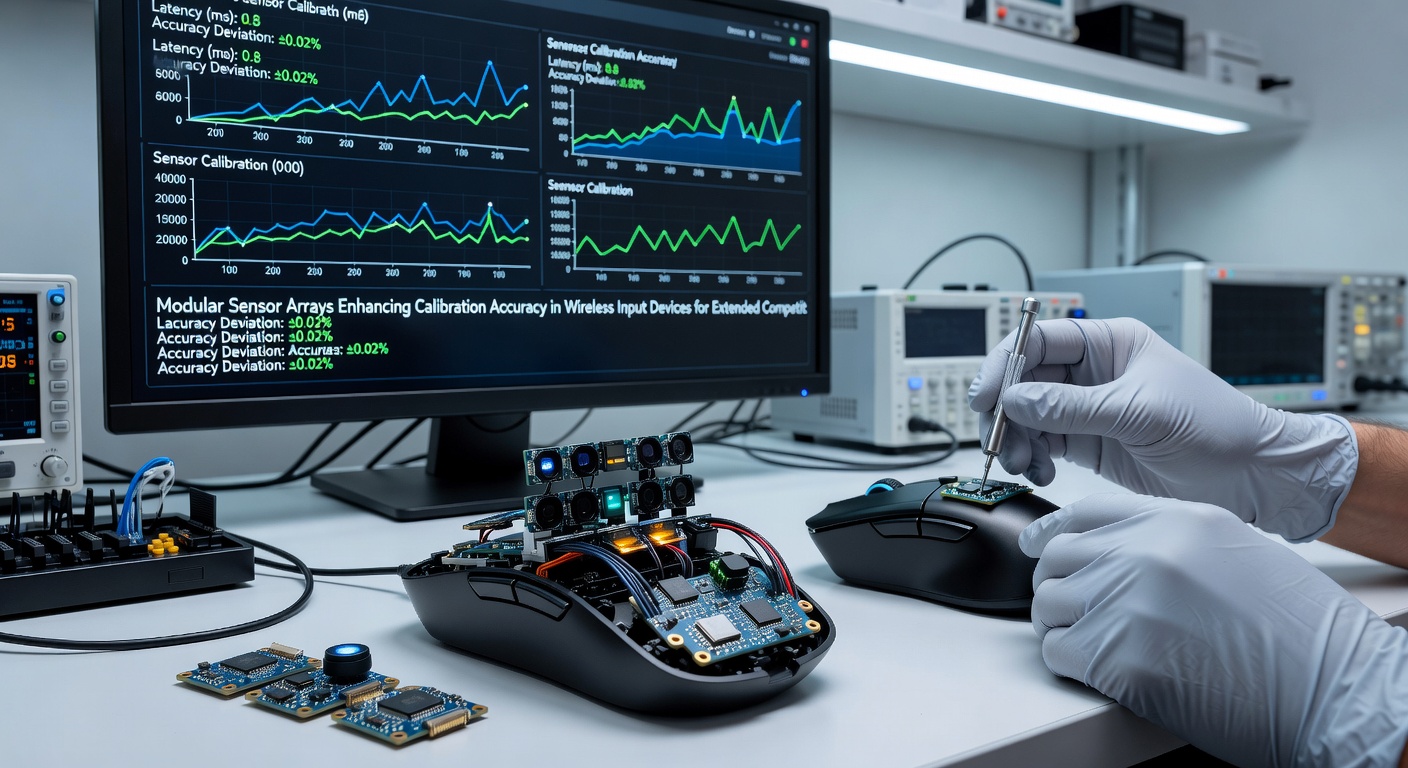
Wireless mice represent the most common application because their compact form factors benefit directly from interchangeable optical and inertial modules. Figures released by the Interactive Software Federation of Europe reveal adoption rates climbing steadily among professional players, with roughly 35 percent of surveyed competitors reporting use of modular-equipped peripherals by early 2026. Keyboard and gamepad variants follow similar patterns, though their larger chassis allow additional sensor types such as pressure-sensitive arrays for analog input refinement.
Battery efficiency improves when calibration routines run locally on the array rather than relying on constant host-device communication, and field measurements confirm average session lengths extend by 15 to 20 percent before recharge becomes necessary. Observers tracking professional circuits note fewer device swaps during matches, which reduces downtime and maintains competitive flow.
Industry Standards and Future Developments
Standards organizations have begun drafting interoperability guidelines that specify connector pinouts, power delivery limits, and data packet formats so modules from different suppliers function across brands. A Horizon Europe consortium report outlines collaborative testing protocols that evaluate array performance under variable temperature and humidity conditions typical of tournament venues.
Future iterations may integrate machine-learning co-processors directly on the array board to predict and preempt drift patterns based on individual usage profiles. Early prototypes tested in controlled environments show further reductions in recalibration frequency, though widespread deployment remains dependent on regulatory approval for radio-frequency emissions across regions.
Conclusion
Modular sensor arrays deliver measurable improvements in calibration stability for wireless input devices used over prolonged competitive periods. Evidence from multiple research bodies and adoption statistics confirms their role in sustaining input precision where fixed-sensor designs encounter progressive degradation. Continued refinement of standards and integration methods positions these systems as a foundational element in next-generation gaming hardware.