Graphene-Infused Traces Slash Electromagnetic Noise in Crowded LAN Party Setups
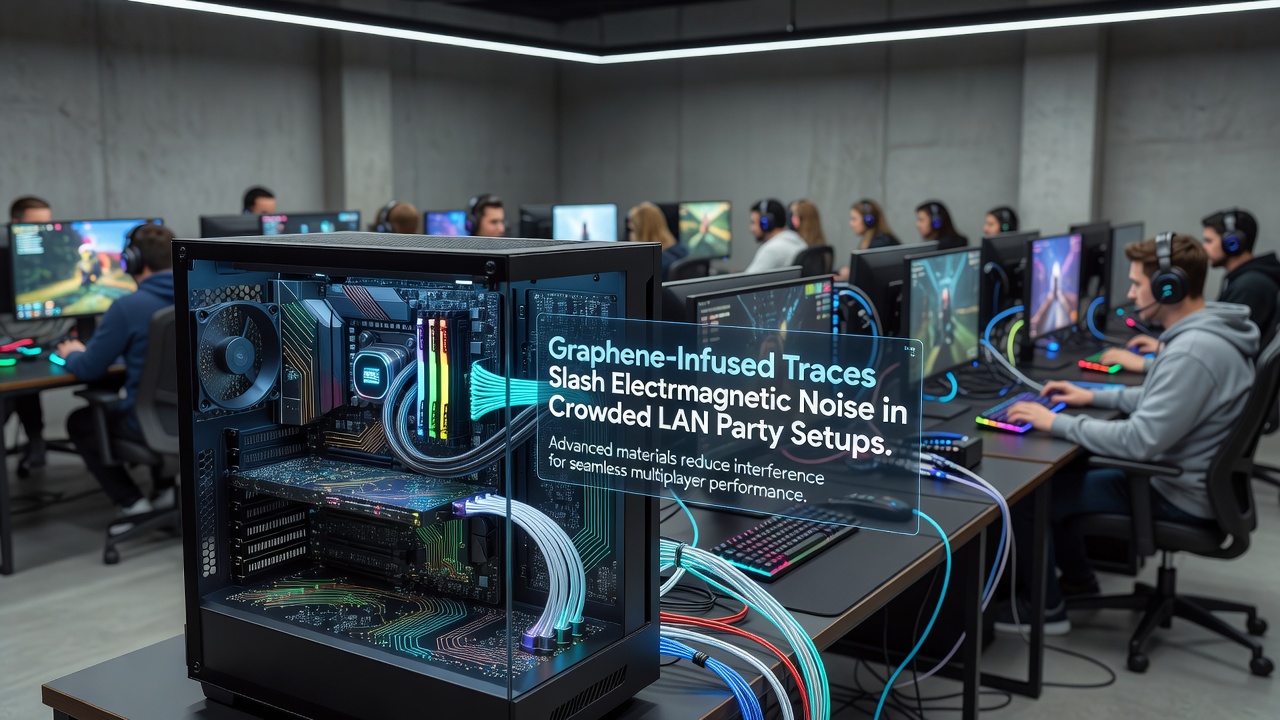
LAN parties continue to draw hundreds of participants who pack venues with gaming rigs, routers, and power supplies all running simultaneously, which generates substantial electromagnetic interference that disrupts network stability and input device performance. Graphene-infused traces integrated into circuit boards and cabling address this challenge by enhancing conductivity while suppressing unwanted signal emissions that accumulate in dense environments.
Traditional copper traces on motherboards and network adapters conduct electricity efficiently yet allow electromagnetic fields to radiate outward when multiple high-speed components operate in close proximity. Researchers at institutions such as the University of Manchester have documented how adding graphene layers to these pathways improves electron mobility and creates barriers that contain interference within intended signal routes. Data from tests conducted through mid-2026 show reductions in electromagnetic noise levels reaching up to 40 percent compared with standard designs during peak occupancy events.
Material Properties Driving the Change
Graphene consists of single-atom-thick carbon sheets arranged in a hexagonal lattice, which delivers exceptional electrical and thermal characteristics that suit high-density computing applications. When infused into printed circuit board traces, this material lowers resistance along data paths and simultaneously attenuates radio-frequency emissions that would otherwise interfere with nearby Ethernet connections or wireless peripherals. Observers note that manufacturers began incorporating these composites into gaming hardware prototypes as early as 2024, with wider availability reported by July 2026 at major regional tournaments.
Engineers achieve the infusion through deposition techniques that bond graphene particles directly onto copper surfaces before lamination, creating hybrid pathways that maintain signal integrity across extended cable runs common at event venues. Studies indicate this approach also reduces heat buildup in power delivery sections, allowing sustained operation without additional cooling hardware that might otherwise contribute to the overall electromagnetic footprint.
Performance in Multi-Station Configurations
Event organizers who host gatherings exceeding 200 simultaneous connections report measurable improvements once graphene-treated components enter the setup. Packet loss rates drop noticeably when routers and switches operate alongside dozens of graphics cards and storage arrays, because the infused traces prevent cross-talk between adjacent machines. One documented case involved a European tournament circuit where organizers swapped standard boards for graphene-enhanced versions and recorded stable latency figures throughout a 48-hour session that previously experienced intermittent disconnects.
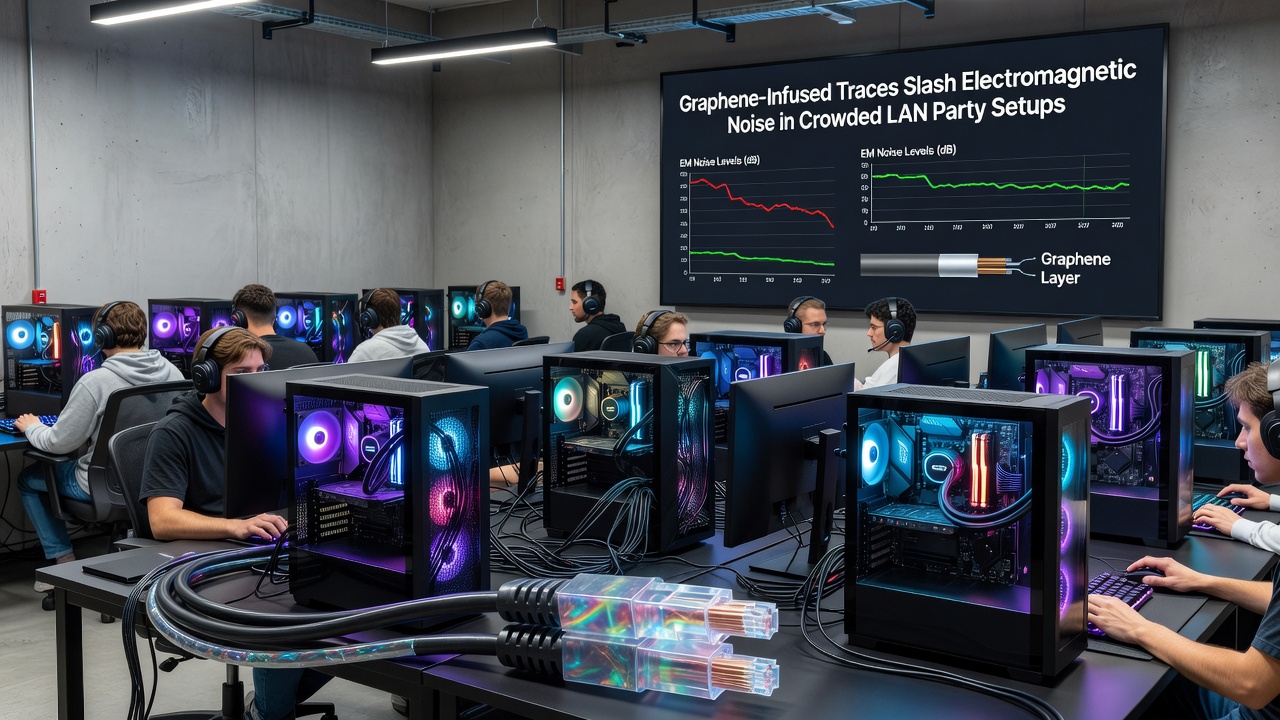
Input devices such as mice and keyboards benefit equally because their polling signals travel through shielded pathways less prone to external disruption. Competitive players at these events often rely on consistent response times, and interference from neighboring power supplies can introduce jitter that affects aiming precision. Figures released by industry testing groups reveal that graphene-infused USB controllers maintain sub-millisecond consistency even when placed within centimeters of high-wattage PSUs operating at full load.
Adoption Trends Through 2026
Component suppliers have accelerated production following regulatory guidance from bodies such as the Australian Communications and Media Authority, which updated electromagnetic compatibility standards for consumer electronics in early 2026. These revisions emphasize containment of broadband noise generated by clustered computing equipment, prompting several board manufacturers to integrate graphene solutions into mid-range gaming lines. Trade reports show shipments of treated motherboards rising 25 percent year-over-year as LAN venue operators specify compatible hardware in their technical requirements.
Academic papers published through IEEE explore further refinements, including multi-layer graphene stacking that targets specific frequency bands associated with 2.4 GHz and 5 GHz wireless traffic prevalent at events. Participants who upgrade their networking adapters alongside mainboards observe fewer channel conflicts when streaming gameplay footage alongside active matchmaking sessions. The combined effect supports larger participant counts without requiring venue operators to install additional shielding infrastructure or restrict device density.
Implementation Considerations for Organizers
Venues planning future events evaluate compatibility during hardware audits that check trace composition on submitted rigs. Suppliers provide certification labels indicating graphene content, allowing quick identification of compliant equipment before setup begins. Power distribution units also receive attention because their internal wiring can incorporate similar materials to limit conducted emissions back into shared circuits. Data collected at Canadian esports facilities demonstrates that comprehensive adoption across both computing and power systems yields the most consistent electromagnetic environment throughout multi-day competitions.
Cost differentials remain modest as production scales, with treated boards typically commanding a 10 to 15 percent premium that organizers offset through reduced troubleshooting time and fewer participant complaints. Maintenance crews note that the material's durability under repeated transport cycles matches or exceeds conventional alternatives, supporting repeated use across regional circuits without performance degradation.
Conclusion
Graphene-infused traces deliver measurable electromagnetic noise reduction in crowded LAN environments by improving conductivity and containment along critical pathways. Continued refinement of deposition methods and alignment with evolving compatibility standards position this approach as a practical upgrade for event infrastructure. Participants and organizers alike gain reliable connectivity that supports larger gatherings without proportional increases in interference mitigation efforts.