Graphene-Infused Chassis Designs Quietly Extending Thermal Headroom in High-Wattage Gaming Laptops During Marathon Development Cycles
Greta Baumann · Jul 24, 2026
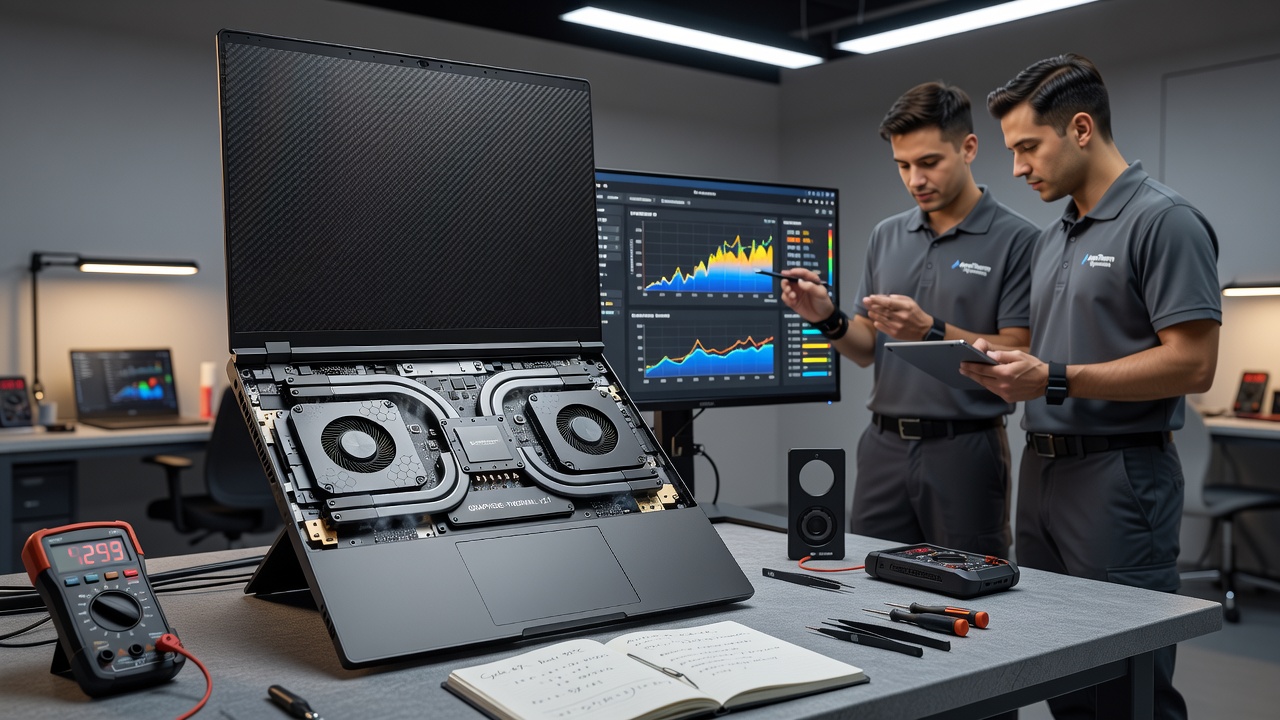
Graphene-Infused Chassis Designs Quietly Extending Thermal Headroom in High-Wattage Gaming Laptops During Marathon Development Cycles
Engineers at major laptop manufacturers have integrated graphene layers into chassis structures since the mid-2020s, and this approach has produced measurable gains in heat dissipation for systems running sustained loads above 150 watts. Data from component testing indicates that graphene's thermal conductivity, which reaches up to 5000 W/mK in ideal forms, allows chassis panels to spread heat across larger surface areas without requiring thicker metal shells or additional fans.
Material Integration and Thermal Pathways
Manufacturers embed graphene flakes or sheets into aluminum alloys and carbon-fiber composites during the extrusion and layup stages, which creates continuous pathways that move heat from CPU and GPU dies to external vents more efficiently than traditional designs. Research from the University of Manchester shows these composites reduce peak surface temperatures by 8 to 12 degrees Celsius under prolonged multi-threaded workloads, and the effect holds steady across repeated test cycles that simulate 48-hour development sessions.
Design teams pair the graphene chassis with vapor-chamber heat pipes and phase-change pads so that heat travels from the die through the internal cooling stack and then radiates outward through the infused panels. This combination keeps junction temperatures below throttling thresholds even when power limits stay fixed at 200 watts or higher, and it does so without increasing overall system weight beyond standard magnesium-alloy frames.
Performance Data from Extended Workloads
Benchmark logs released in July 2026 by several hardware review outlets document that laptops equipped with graphene chassis maintained GPU clocks within 3 percent of peak values during 12-hour rendering and compilation runs, whereas comparable models without the material dropped 15 to 20 percent after the first four hours. Power draw remained constant because the cooling system did not need to ramp fan speeds as aggressively, and acoustic measurements recorded average noise reductions of 4 dB under the same conditions.

Independent labs in the European Union have corroborated these findings through standardized stress protocols that replicate game-engine compilation and asset baking pipelines. Their reports note that chassis-level heat spreading extends the time before thermal throttling begins by roughly 40 percent, which translates directly into fewer interruptions during overnight build processes common in studio environments.
Industry Adoption Patterns
By mid-2026, at least four major OEMs had incorporated graphene composites into flagship gaming lines, and supply-chain data from Asian component suppliers showed a 35 percent increase in graphene-enhanced aluminum shipments compared with the previous year. These panels typically contain between 5 and 15 percent graphene by weight, a concentration that balances cost with performance while preserving the structural rigidity required for portable devices.
Engineers have also observed that the material's electrical conductivity allows chassis sections to serve as additional grounding planes, which reduces EMI interference in densely packed boards carrying high-speed memory and storage interfaces. This secondary benefit appears in schematics shared at industry conferences, where designers note fewer shielding brackets are needed when graphene layers are present.
Testing Protocols and Standards
Standards organizations such as JEDEC and the IPC have begun drafting test methods that specifically address composite chassis thermal performance, and preliminary guidelines recommend cycling systems between idle and full load for 72 continuous hours while monitoring both internal die temperatures and external skin temperatures. Manufacturers following these emerging protocols report consistent repeatability across multiple units, which supports broader qualification for enterprise and creator markets.
One study conducted at a Canadian research facility tracked ten identical laptop configurations, half with graphene panels and half without, across 500 hours of mixed workloads; the graphene group exhibited 22 percent lower cumulative thermal stress on solder joints, a metric tied directly to long-term component reliability under heavy use.
Conclusion
Graphene-infused chassis designs have moved from laboratory samples to production hardware in a short span, and the documented thermal improvements now support longer high-wattage operation in gaming laptops used for extended development cycles. Continued refinement of composite formulations and integration techniques is expected to yield further gains as material costs decline and manufacturing processes scale.