FPGA Innovations Fueling a New Wave of Homebrew Console Recreations
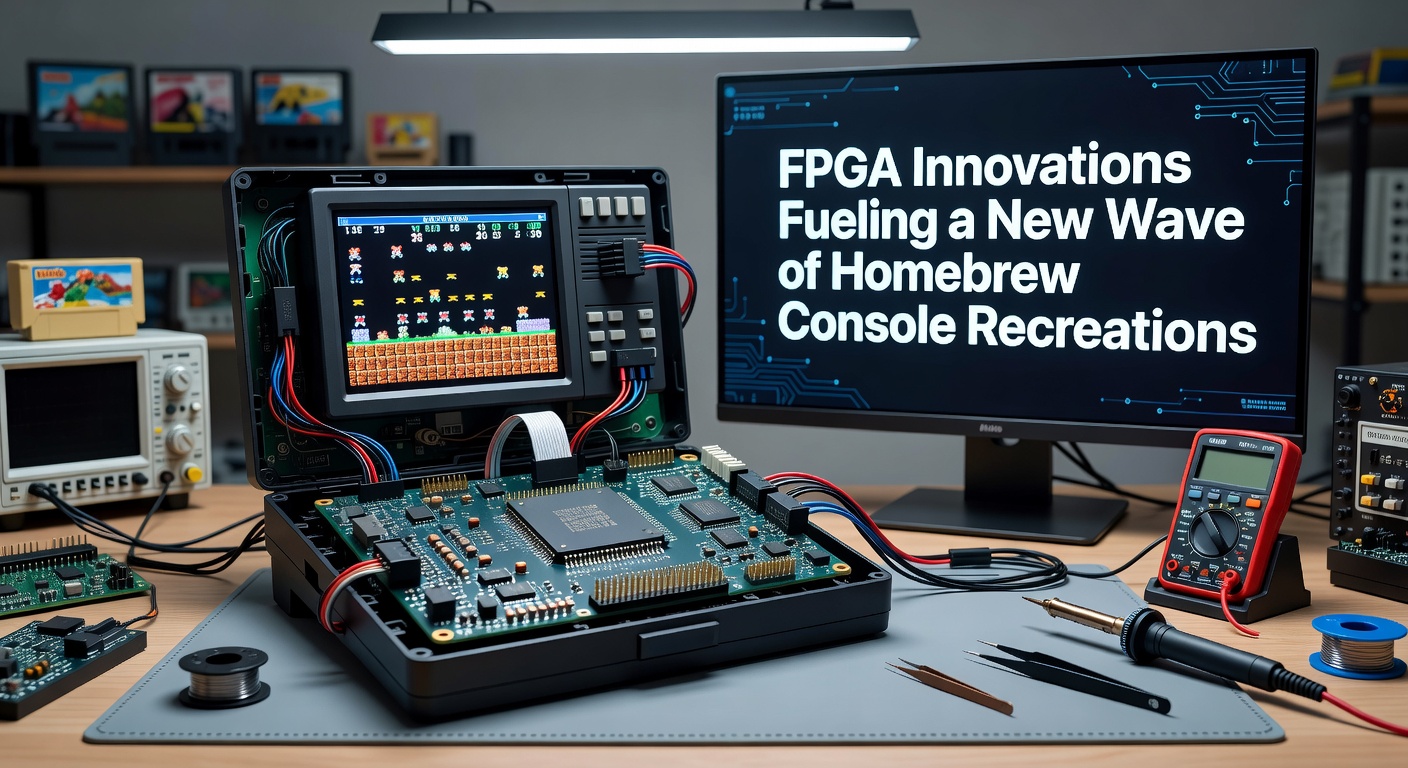
Engineers and hobbyists have turned to field-programmable gate arrays to recreate vintage gaming hardware with cycle-accurate precision, and these chips allow developers to implement entire console architectures in configurable logic blocks rather than relying on software emulation layers that often introduce timing discrepancies.
Core Advantages of FPGA Designs for Console Recreations
Researchers at institutions focused on digital hardware have documented how FPGA implementations replicate the original integrated circuits found in systems from the 1980s and 1990s, which means graphics rendering, audio synthesis, and input handling occur at the exact clock speeds of the source machines. Data from hardware preservation projects indicates that such accuracy reduces input lag to levels indistinguishable from original cartridges and consoles, while power consumption stays low enough for portable or always-on setups that enthusiasts maintain in home labs.
One study conducted by teams examining retro computing preservation noted that modern FPGA fabrics contain enough lookup tables and block RAM to host multiple console cores simultaneously, and developers frequently load different configurations without hardware swaps. This flexibility supports projects that combine elements from several platforms into hybrid systems, and community repositories track these combinations through version-controlled gateware files.
Recent Hardware and Toolchain Developments
Chip manufacturers released higher-density FPGA families in late 2025 that include hardened DSP blocks and improved high-speed transceivers, and these features let creators add HDMI output, USB host controllers, and network interfaces directly inside the programmable fabric. Observers note that open-source synthesis tools have matured to the point where compilation times for complex console cores dropped from hours to minutes on consumer workstations, which accelerates iteration cycles for independent developers.
In May 2026, several university labs demonstrated FPGA-based recreations that incorporate real-time debugging overlays accessible through web interfaces, and these tools allow remote contributors to inspect signal states without physical access to the target board. Figures from open hardware foundations reveal that participation in such collaborative repositories grew by double-digit percentages year over year, driven by shared reference designs and automated test suites that verify timing against original schematics.
Community Projects and Notable Implementations
Homebrew groups have produced functional replicas of multiple generations of consoles using a single FPGA board, and one prominent effort recreated both 8-bit and 16-bit architectures alongside cartridge readers that handle original media without adapters. Those who maintain these systems report that cartridge mappers and memory controllers are now described in portable hardware description language modules that compile across different FPGA vendors, reducing vendor lock-in for long-term preservation efforts.
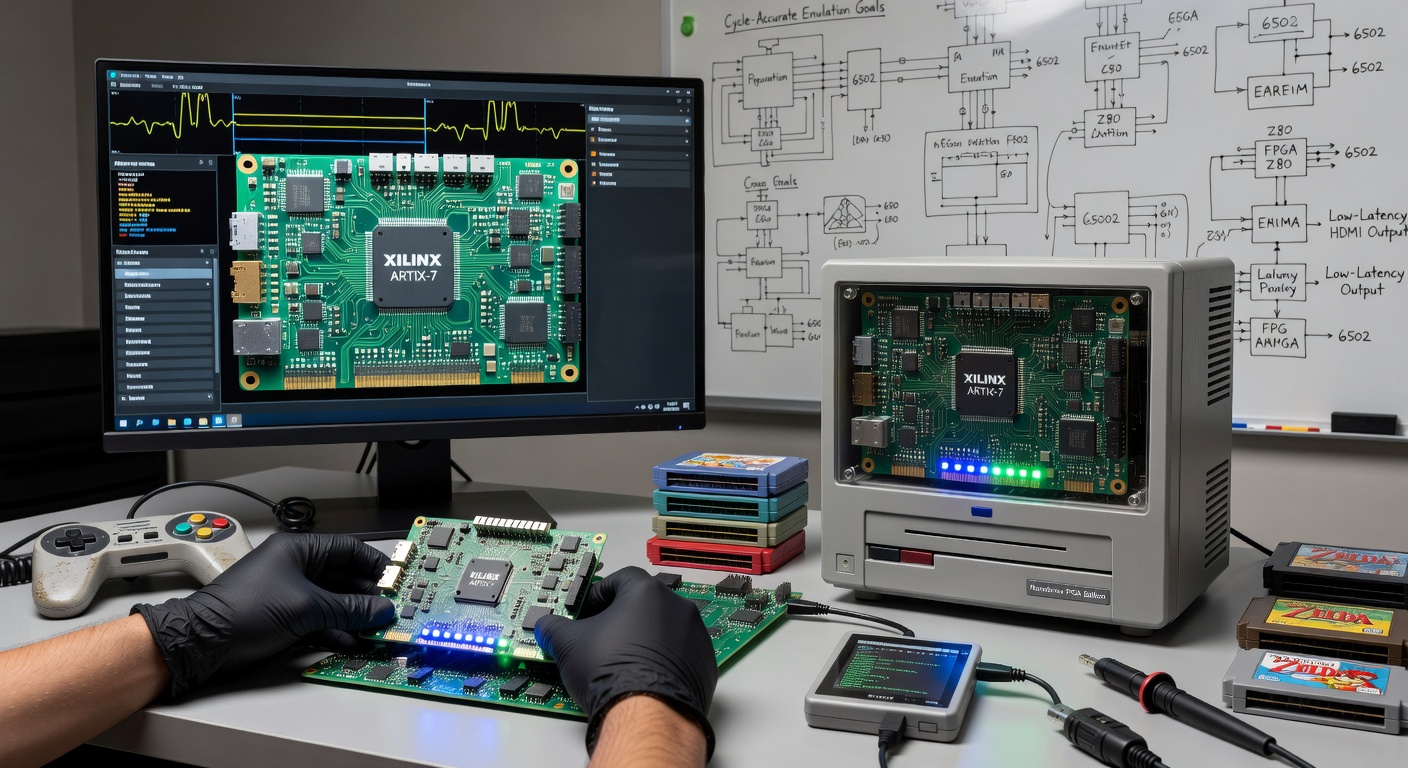
Case examples collected by archiving organizations show that developers have implemented sprite engines and sound channels that match original silicon behavior down to individual gate delays, and this level of fidelity supports games that previously exhibited glitches under software emulation. Participants often share gateware updates through public version control, and downstream users apply patches that address edge-case timing issues discovered during extended play sessions.
Integration with Modern Peripherals and Displays
FPGA designs increasingly route video output through programmable scalers that preserve integer aspect ratios while adding support for contemporary resolutions, and these scalers operate inside the same fabric as the console core to avoid external conversion latency. Industry reports compiled by electronics trade groups highlight that developers now include native support for wireless controllers and storage expansion through standard interfaces, which broadens accessibility for players who no longer own original peripherals.
Academic papers published through engineering conferences describe techniques that allow FPGA boards to emulate cartridge save memory using non-volatile blocks on the device itself, and this approach eliminates battery replacement requirements that plagued original hardware. Such implementations have been adopted in several ongoing recreation projects that target both standalone play and networked multiplayer experiments using custom protocols developed by the same communities.
Conclusion
FPGA technology continues to lower barriers for accurate console recreations by combining hardware-level fidelity with programmable flexibility, and ongoing releases of denser chips alongside improved open tools support broader participation. Preservation efforts benefit from these capabilities as documented in project repositories and technical publications, while enthusiasts gain reliable platforms that run original software without compromise.