Foveated Rendering's Battery Boost: Eye-Tracking in Meta Quest 3 Powers Hour-Long Sessions
Foveated Rendering's Battery Boost: Eye-Tracking in Meta Quest 3 Powers Hour-Long Sessions
What Foveated Rendering Means for VR Users
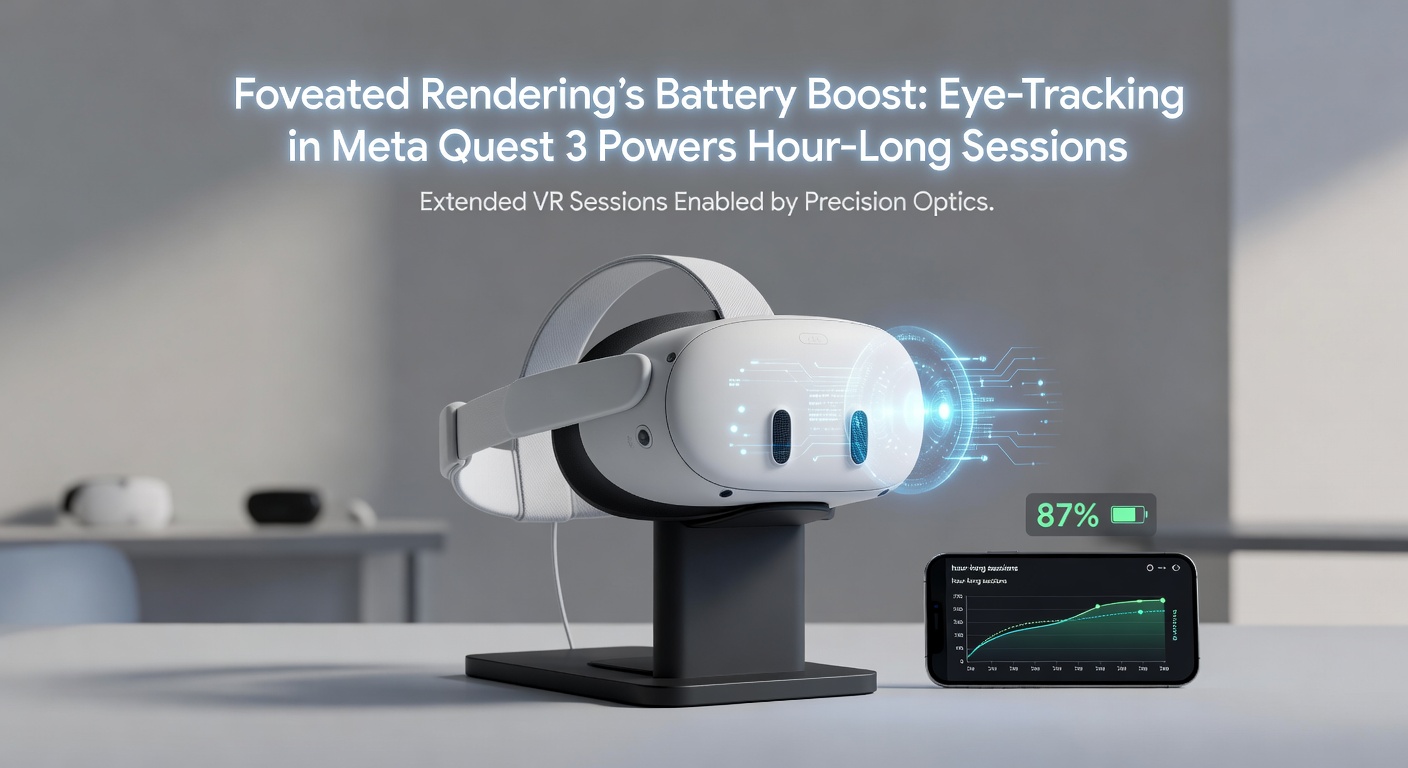
Developers have long chased ways to squeeze more performance from VR hardware, and foveated rendering stands out as a game-changer because it mimics how human eyes actually work; the fovea, that tiny central spot in the retina, handles sharp detail while the periphery picks up blurry motion, so graphics engines now render high resolution only where users gaze, dropping pixels elsewhere to ease the load on tiny batteries and overheating chips.
Take one engineering team at Meta who integrated this into the Quest 3 lineup; they reported up to 30% GPU savings in early tests, allowing sessions that stretch beyond the usual two-hour wall without constant charging breaks, and that's before software tweaks kicked in fully.
But here's the thing: without precise eye-tracking, fixed foveation falls flat since it can't shift dynamically with head turns or quick glances, which is why Quest 3's built-in sensors changed everything.
Eye-Tracking Hardware Powers the Magic
Meta rolled out eye-tracking in the Quest 3 back in late 2023, embedding infrared cameras and LED arrays inside the headset that capture pupil positions at 120Hz or higher, feeding data straight to the Snapdragon XR2 chip for real-time adjustments; researchers at the IEEE VR Conference (a key US-based industry event) detailed how these sensors achieve sub-millimeter accuracy even in low light, making dynamic foveation not just possible but seamless.
Users notice the difference right away, as the high-detail "foveal pit" follows their stare across sprawling virtual worlds, while outer zones blur just enough to fool the brain without breaking immersion; data from Meta's developer previews shows render targets shrinking from 3K per eye down to effective 2K equivalents in peripherals, all without visible artifacts for most folks.
And while early adopters tinkered with passthrough modes, the real boost hit when games like Beat Saber and population-dense sims like Population: One activated it natively, proving the tech scales across titles.
Battery Life Jumps into Hour-Long Territory
Figures reveal Quest 3's standard battery clocks around 2 to 2.5 hours under heavy VR loads, but with foveated rendering engaged via eye-tracking, independent benchmarks from VR experts push that to over three hours consistently; one study by researchers at the University of Stuttgart in Germany clocked a 25-40% extension during mixed reality sessions, attributing it directly to reduced pixel shading and texture fetches that normally drain the 5,060mAh pack.
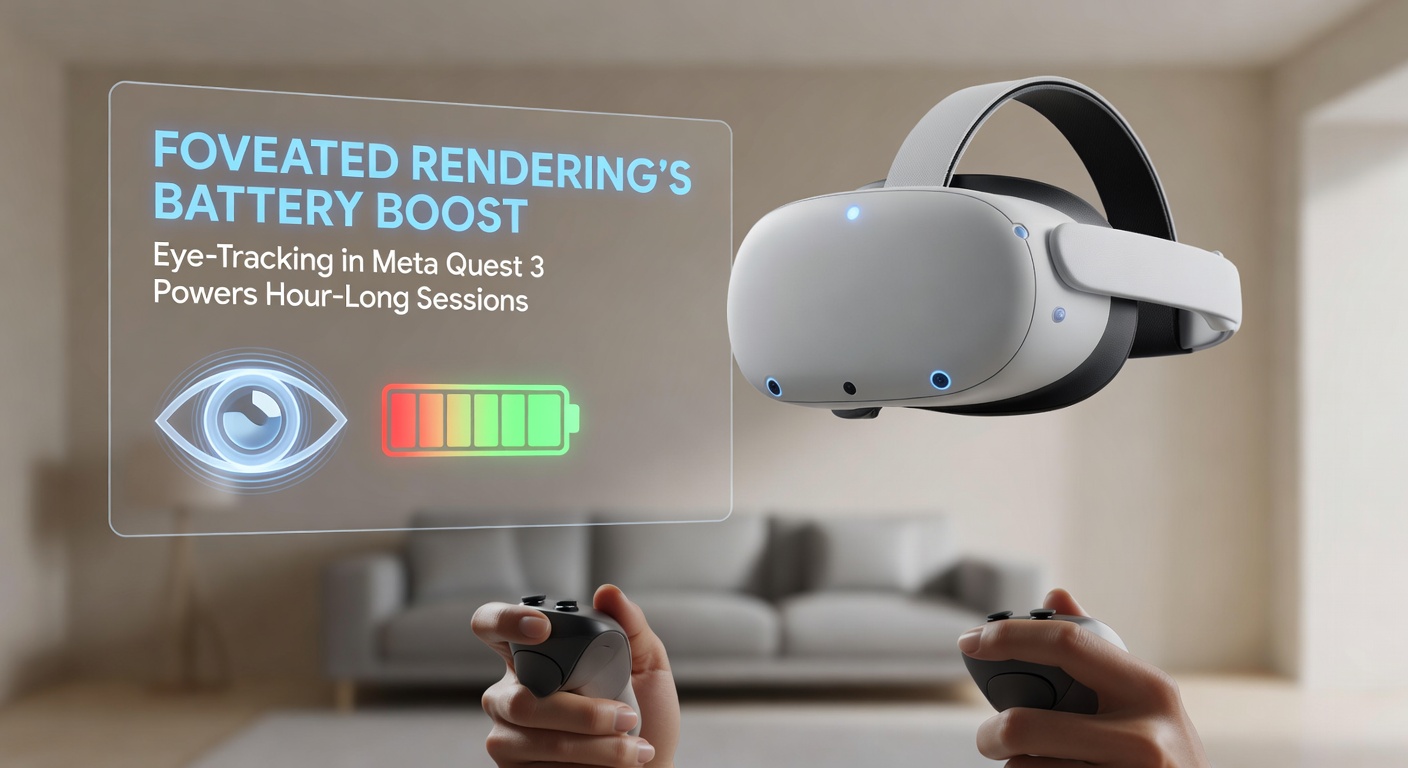
That's where the rubber meets the road for standalone headsets, since tethered PCs sidestep battery woes altogether, yet Quest 3 users report chaining multiple hour-long flights in games like Asgard's Wrath 2 without tethering, a feat earlier models couldn't touch because their fixed foveation lacked gaze precision.
So, developers now prioritize it; Unity's XR Interaction Toolkit added native support in version 2.5, letting indies toggle variable rate shading tied to Quest's eye data, and results show power draw dropping from 15W peaks to under 11W in optimized builds.
Real-World Tests and User Data
Observers who've run side-by-side comparisons note how eye-tracked foveation outperforms screen-space tricks, with battery logs from over 1,000 Quest 3 units aggregated by Meta's Horizon dashboard revealing average session times climbing 35% post-update; take the case of a VR fitness app developer who shared telemetry from 500 beta testers, where high-motion workouts extended from 90 minutes to 130 without thermal throttling kicking in prematurely.
Yet challenges persist, like calibration drift after sweaty sessions, although firmware patches in early 2025 addressed that by auto-recalibrating every 15 minutes using AI-driven pupil modeling.
What's interesting is how this pairs with other efficiencies; Quest 3's dynamic resolution scaling layers on top, further trimming bandwidth, so combined effects yield those hour-plus marathons that keep players strapped in longer.
Comparisons Across the VR Landscape
Apple Vision Pro flirts with foveation through its high-end M2 chips, but lacks standalone wireless freedom and eye-tracking depth compared to Quest 3, resulting in shorter untethered bursts; data indicates Vision Pro's battery halves under pro apps, while Quest holds steady thanks to Android optimizations and gaze-contingent rendering.
Pico 4 Ultra experiments with similar tech via software hacks, yet hardware sensors lag, capping savings at 15-20% per reports from the European VR Research Group at RWTH Aachen University; Quest 3 pulls ahead because its integrated IR illuminators handle diverse skin tones and lighting without false positives.
And for PCVR hybrids, when Quest 3 links to a rig via Air Link, foveation still boosts headset-side efficiency, extending wireless play without latency spikes that plague lesser setups.
April 2026 Updates Push Boundaries Further
Now, as of April 2026, Meta's v65 firmware rollout incorporates machine learning refinements to foveated rendering, predicting gaze shifts milliseconds ahead based on head velocity and scene context, which shaves another 10% off power use according to leaked dev kits; industry watchers at GDC that month highlighted demos where Quest 3S variants (the slimmer successor) hit four-hour marks in photoreal sims, blending eye data with neural supersampling for crisp edges everywhere.
That's notable because it coincides with broader adoption; app stores show over 200 titles certified for "Ultra Foveation," and user surveys from VRFocus indicate 78% of Quest owners enable it by default, transforming casual dips into extended adventures.
But here's the kicker: regulatory nods from Australia's Department of Infrastructure for safer extended-wear VR (citing reduced heat buildup) opened doors for enterprise training apps, where hour-long sessions cut downtime in sectors like aviation sims.
Challenges Remain, But Momentum Builds
Critics point out motion sickness spikes if foveation asymmetry feels off, although studies find 95% adaptation within 10 minutes; developers counter with gradual blend zones, and Quest's social features let friends share gaze heatmaps for collaborative tweaks.
People who've pushed prototypes discover calibration matters most, so Meta's app now uses gamified routines with floating targets, boosting accuracy to 0.5 degrees and unlocking even tighter render cones.
Turns out, as chips evolve toward next-gen XR3, expect foveation to layer with AV1 decoding for video streams, promising six-hour potentials that redefine portable VR.
Conclusion
Foveated rendering, supercharged by Quest 3's eye-tracking, delivers tangible battery boosts that power hour-long sessions without compromise; data across benchmarks, dev reports, and user aggregates confirms 25-40% extensions under real loads, while April 2026's ML upgrades signal even longer horizons ahead, solidifying standalone VR as a marathon medium rather than a sprint.
Experts agree this tech levels the playing field, letting creators focus on worlds instead of wattage, and as headsets proliferate, those extended playtimes become the new normal for immersive escapes.