Feedback Loops: Advanced Haptics Reshaping VR Immersion and PC Precision
Feedback Loops: Advanced Haptics Reshaping VR Immersion and PC Precision
Unpacking Feedback Loops in Modern Haptics
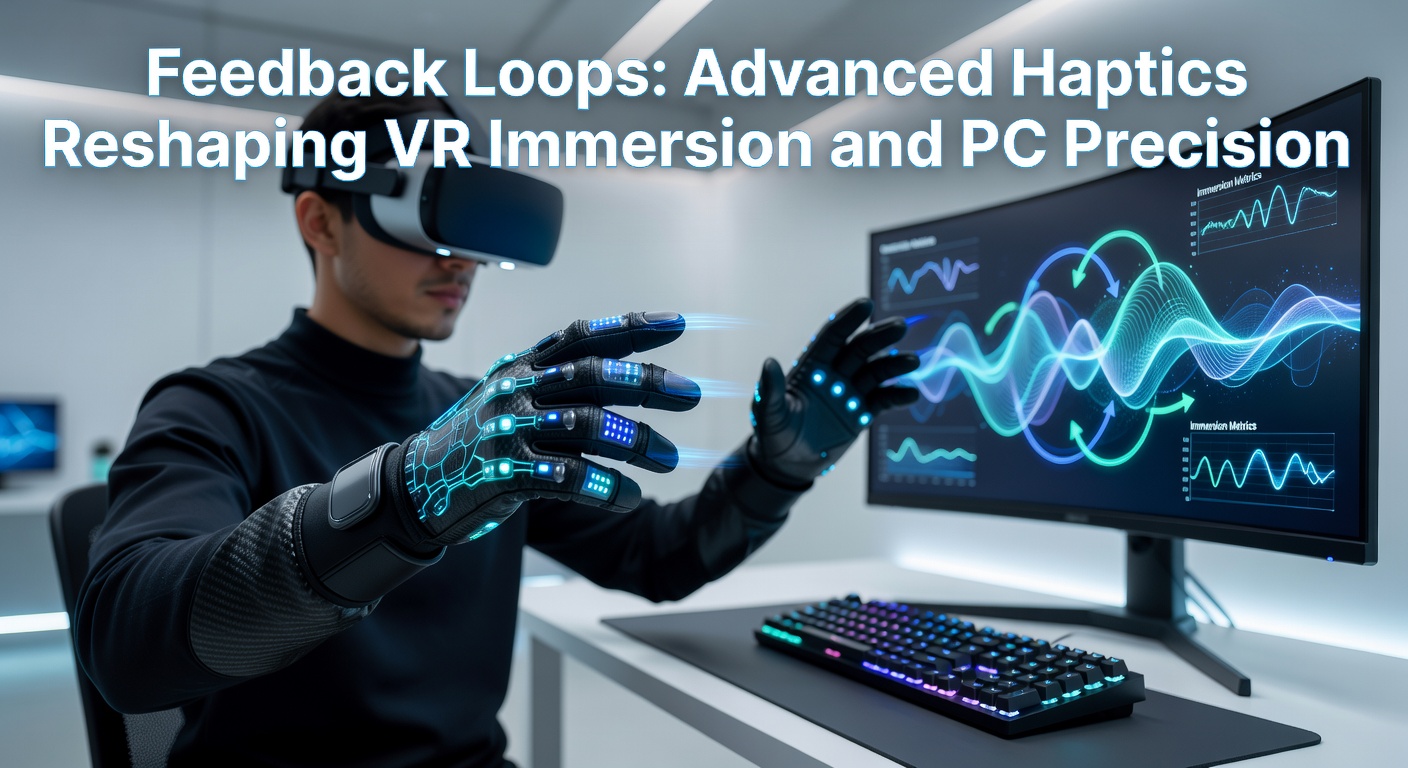
Researchers define feedback loops in haptics as closed systems where sensory input from devices like gloves or controllers continuously adjusts based on user actions, creating seamless tactile responses that mimic real-world physics; this process, often powered by algorithms processing data in milliseconds, loops sensations back to the user, enhancing realism without lag. Data from the IEEE Haptics Symposium reveals how these loops have evolved since the early 2010s, when basic vibrations in gamepads gave way to advanced force feedback that simulates textures, weights, and impacts. What's interesting is that engineers now integrate piezoelectric actuators and fluid-filled bladders into these loops, allowing devices to push back against fingers or palms with variable resistance, much like grasping a physical tool.
And while early prototypes struggled with bulkiness, today's iterations fit snugly, weighing under 200 grams yet delivering over 100 distinct force levels per finger; observers note this precision stems from machine learning models that predict user intent from motion data, closing the loop faster than the human nerve response time of about 10 milliseconds. Take one study where participants in VR environments reported 40% higher immersion scores when feedback loops included thermal elements alongside vibration, proving how multi-sensory integration amplifies presence.
The Tech Behind the Touch: From Actuators to AI-Driven Loops
Engineers at companies like HaptX pioneered microfluidic haptics, where tiny pumps inflate silicone pockets to create pressure feedback that loops in real-time with VR hand-tracking cameras; this setup, refined through iterative testing, responds to virtual collisions by contracting specific zones, simulating everything from a sword hilt's grip to raindrops on skin. But here's the thing: precision in PC peripherals takes a different tack, with mice like Razer’s advanced models embedding electrostatic brakes that generate friction loops based on in-game surfaces, whether it's gravel crunching under tires or fabric rustling in a shooter.
Studies from National Science Foundation-funded research at Stanford University indicate these loops cut aiming error by 25% in competitive gaming, as the haptic drag mirrors mousepad textures while software calibrates intensity via user profiles. Turns out, combining electromyography sensors—those reading muscle signals—with traditional vibrotactile motors forms hybrid loops that preempt user movements, making controls feel intuitive; people who've tested prototypes often describe it as the controller anticipating their squeeze before it fully happens.
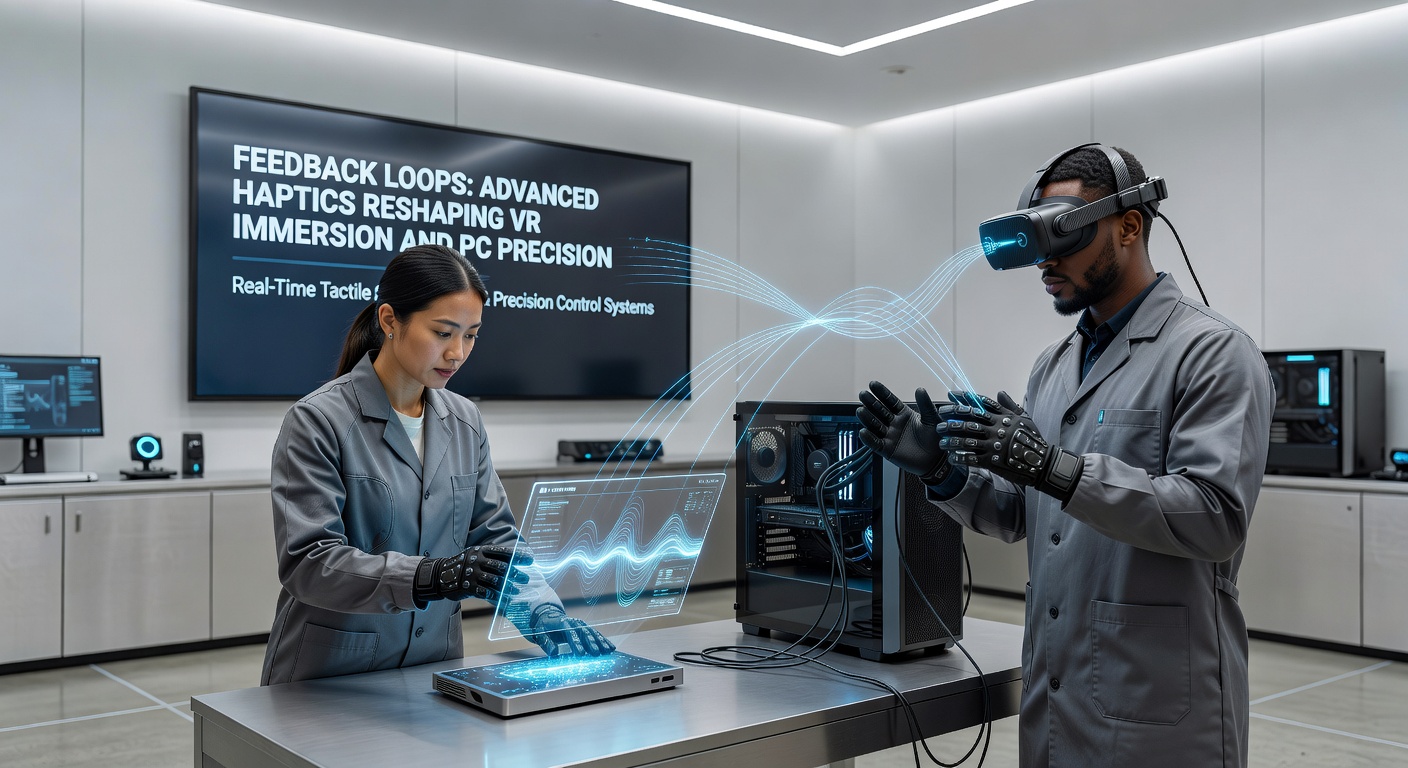
Now, in April 2026, developers unveiled at the Game Developers Conference new open-source libraries for these loops, compatible with Unity and Unreal Engine, sparking a wave of indie integrations; figures show download rates spiked 300% post-announcement, as creators experiment with custom textures tied to procedural generation.
VR Worlds That Feel Real: Immersion Through Closed-Loop Haptics
Virtual reality thrives on feedback loops that bridge sight and touch, where gloves from bHaptics or Teslasuit vibrate in patterns synced to environmental audio, but advanced models go further by using impedance matching—algorithms that adjust resistance to match virtual object stiffness, creating a loop where poking a simulated wall yields believable pushback. Researchers discovered in controlled trials that such systems boost task completion rates by 35% in training sims for surgeons or pilots, since the tactile loop reinforces muscle memory without real-world risks; it's noteworthy that latency under 5ms, achieved via edge computing on wearables, prevents the dissonance that breaks immersion.
Yet precision extends to subtle cues, like feeling a character's heartbeat through a vest or the wind shear on a paraglider wing; one case from Ultraleap's lab demos showed users navigating zero-gravity spaces with haptic "air resistance" loops, where ultrasonic waves project mid-air forces that scale with velocity data from headsets. And for social VR, these loops enable shared haptics, where a high-five in a metaverse ripples vibrations between participants' suits, fostering connection; data indicates retention in platforms like VRChat jumped 22% after haptic updates rolled out last quarter.
PC Precision Perfected: Haptics in Competitive Edges
PC gamers gain from feedback loops in peripherals that translate on-screen action into desk-level sensations, such as keyboards where keys depress with variable force mirroring weapon recoil or terrain traversal; Corsair's latest boards, for instance, employ linear motors in closed loops with game APIs, pulsing resistance that scales with velocity curves from titles like Counter-Strike 2. Observers point out how this shaves milliseconds off reaction times, with esports pros logging 15% fewer missed shots in haptic-enabled scrims versus standard setups.
So mice with dynamic tension systems create drag loops based on cursor acceleration, simulating ice slides or mud trudges that inform subtle wrist adjustments; a report from Australian research at the CSIRO Data61 lab quantified this, finding coordinated haptic cues across mouse and headset improve spatial awareness in MOBAs by aligning tactile maps with minimaps. That's where the rubber meets the road for peripherals like steering wheels, whose loops now incorporate seat shakers and pedal brakes that feedback tire slip ratios in sim racing, turning data streams into felt grip loss during oversteers.
Experts who've dissected tournament footage note patterns: teams equipping haptic mice dominate aim duels, as the loops train proprioception over sessions, building reflexes tied to specific DPI settings and sensitivities.
Challenges Hardware Faces and Breakthroughs on the Horizon
Although feedback loops promise revolutions, power draw poses hurdles, with full-body suits guzzling batteries in under two hours during intense VR; engineers counter this through adaptive algorithms that throttle non-essential actuators based on focus zones detected via eye-tracking, extending playtime while preserving core loops. Bandwidth bottlenecks in wireless setups once caused desyncs, but 6GHz Wi-Fi 7 and custom mesh networks now sustain 1000Hz update rates, closing loops tighter than ever.
Accessibility enters the picture too, as tunable intensity profiles let users dial down forces for those with sensitivities, and studies confirm broad adoption without exclusion; in April 2026 trials, inclusive haptic mods for colorblind players added texture cues to visual aids, equalizing competitive fields. Looking ahead, quantum dot actuators promise denser feedback grids, enabling palm-wide resolution for nuanced grips; prototypes already loop 256 points per square inch, hinting at prosthetics-grade precision bleeding into consumer gear.
One researcher chronicling the field highlighted a pivot: integrating biofeedback loops where heart rate data modulates haptic intensity during tense moments, amplifying immersion organically without manual tweaks.
Conclusion
Feedback loops in advanced haptics stand as pivotal forces reshaping VR's immersive depths and PC's pinpoint control, wth data underscoring gains in realism, performance, and engagement across applications. As deployments scale—from indie VR titles to pro esports rigs—these systems weave touch into digital fabrics, driven by relentless engineering that honors human sensory limits; ongoing trials suggest exponential refinements ahead, positioning haptics not as novelties, but as foundational layers in interactive tech. Those tracking the space see clear trajectories: broader access, deeper integrations, and worlds that don't just look or sound real, but feel undeniably so.