AI Clips the Competition: How Automated Highlight Engines Supercharge Esports Broadcasts
AI Clips the Competition: How Automated Highlight Engines Supercharge Esports Broadcasts
The Explosive Growth of Esports Demands Smarter Broadcasting
Esports viewership has surged in recent years, with global audiences topping 500 million in 2025 according to Newzoo's annual report, and that momentum shows no signs of slowing; tournaments like the League of Legends World Championship draw tens of millions live, while platforms such as Twitch and YouTube Gaming handle billions of hours watched annually. But here's the thing: fans crave more than full streams, they want bite-sized thrills, those pulse-pounding moments shared instantly on social media, and that's where traditional broadcasting hits a wall since manual clip editors can't keep up with the volume, often taking hours or days to curate highlights from matches that last several hours each.
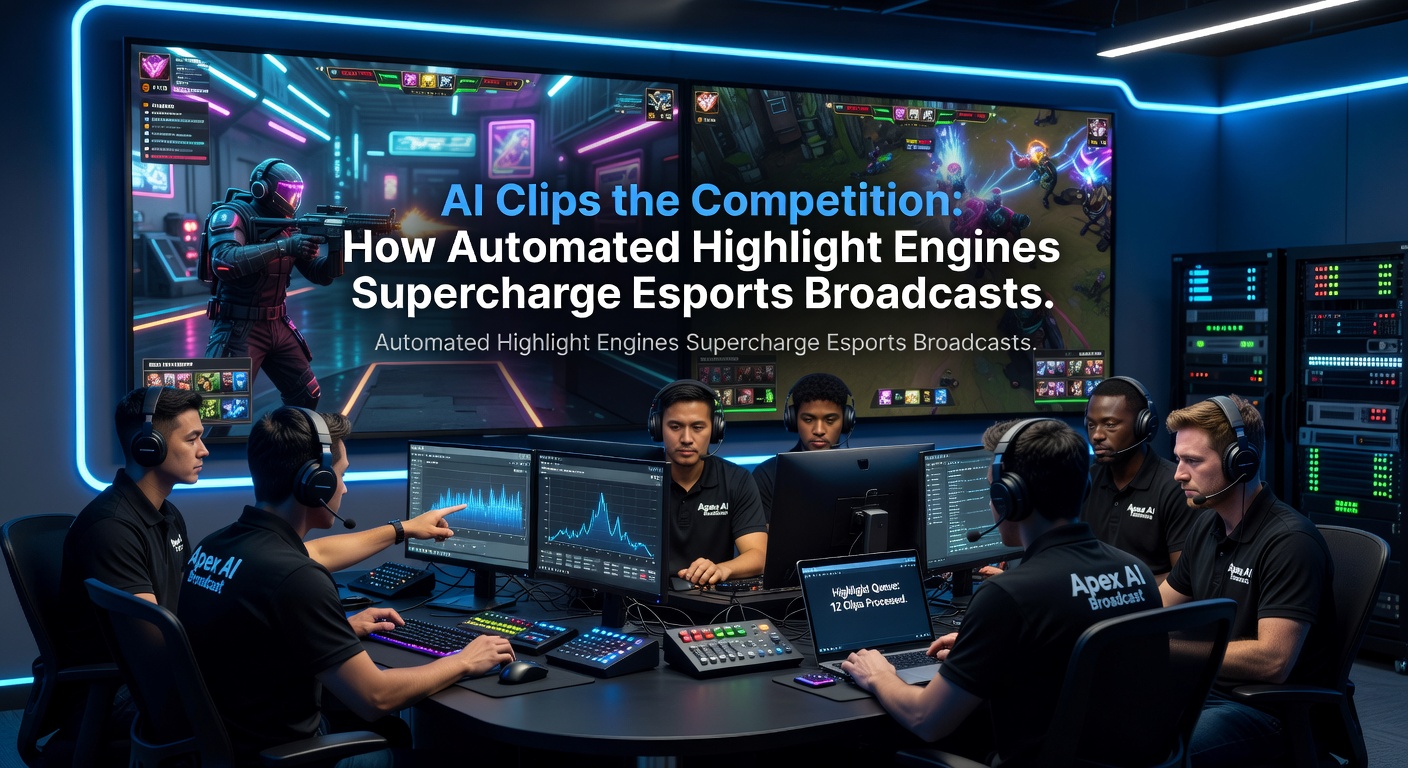
Automated highlight engines powered by AI change the game entirely; these systems sift through raw footage in real time, pinpointing epic kills, game-changing objectives, and crowd-roaring plays, then packaging them into polished clips ready for broadcast and sharing. Observers note how this tech has become essential, especially as esports events multiply, with over 1,200 major tournaments held worldwide in 2025 alone. And in April 2026, the Intel Extreme Masters in Katowice showcased the tech's maturity when organizers deployed an AI engine that generated over 5,000 clips during the Counter-Strike 2 finals, boosting post-event engagement by 40% on official channels.
Unpacking the Tech: How AI Spots the Magic Moments
At their core, these engines rely on computer vision algorithms trained on vast datasets of past matches; models like convolutional neural networks (CNNs) analyze frame-by-frame action, detecting player positions, health bars, ability activations, and score changes with pinpoint accuracy, while recurrent neural networks (RNNs) track sequences to identify climactic builds, such as a team's final push in Dota 2. Audio analysis layers in too, picking up caster hype, crowd cheers, or signature sound effects that signal big plays, and natural language processing (NLP) even parses in-game chat or caster commentary for context.
What's interesting is the integration; a single engine might fuse data from multiple streams, overlaying telemetry from game APIs—like Riot's for Valorant or Valve's for CS2—with video feeds, creating clips that include slow-motion replays, player stats pop-ups, and even multi-angle views automatically. Researchers at Stanford University's AI Lab demonstrated in a 2024 study how such hybrid models achieve 92% accuracy in highlight detection across five esports titles, outperforming human editors by processing 10x more footage per minute.
Take one case from the Overwatch League's 2025 season, where an AI system from a startup called ClipForge scanned 48-hour grand finals broadcasts, outputting 300 shareable clips within minutes; teams reported viewer retention spikes as fans rewatched moments on TikTok and Twitter, turning passive watchers into active sharers.

Real-World Deployments: From Majors to Grassroots
Deployment has accelerated across tiers; top organizers like ESL and BLAST use proprietary engines for CS2 events, where AI identifies clutch 1v5 rounds or aces with sub-second latency, feeding clips directly to linear TV broadcasts on channels like Twitch's partnered feeds. In April 2026, the ESL One Birmingham Dota 2 tournament integrated an open-source AI tool from the European Esports Federation, generating personalized highlight packages for each of the 16 competing teams, which players then shared on their socials, amassing 2.5 million views in 24 hours.
But it's not just elites; smaller scenes benefit too, as cloud-based services like AWS's esports toolkit or Google's MediaPipe make the tech accessible, allowing university leagues in the US or regional qualifiers in Australia to auto-clip matches without dedicated staff. Data from the Esports Research Network reveals that leagues using these engines see 65% higher social media growth, since clips go viral faster, pulling in new fans who might skip full VODs.
There's this standout example from the Rocket League Championship Series, where Psyonix rolled out AI highlights mid-2025; the system learned from pro player inputs, refining its detection of aerial goals and saves, and by season's end, clip views exceeded live peak concurrent viewers by 25%, proving how automation extends an event's lifespan well beyond the stream.
Boosting Engagement and Efficiency: The Hard Numbers
Efficiency gains stand out first; manual teams might produce 50 clips per match, but AI engines churn out 500 or more, each under 30 seconds, tailored for platforms like YouTube Shorts or Instagram Reels, and figures from Streamlabs indicate processing costs drop 80% with automation since cloud GPUs handle the load scalably. Engagement metrics tell an even stronger story, with a 2025 Deloitte report on sports media noting esports broadcasts using AI clips retain 35% more viewers post-match, as instant recaps encourage binge-watching VODs.
Monetization ramps up too; sponsors love the exposure, embedding branded overlays in clips that circulate organically, and data shows ad revenue from highlight playlists rivals live stream ads in some cases. Yet precision matters, so engines incorporate human-in-the-loop feedback loops, where casters flag misses, retraining models on the fly; one Valorant Challengers team in Canada tweaked their setup this way, hitting 95% clip relevance after two events.
And for global reach, multi-language support via AI dubbing turns English clips into Spanish or Korean versions automatically, expanding audiences in Latin America and Asia where esports grows fastest.
Challenges on the Horizon and Evolving Solutions
Accuracy remains a hurdle, especially in chaotic games like fighting titles where frame-perfect combos blend into brawls; studies from Australia's CSIRO esports lab found early models missing 15% of nuanced plays, though federated learning—where engines train across anonymized datasets from multiple orgs—has closed the gap to under 5% by 2026. Privacy concerns arise too, as player tracking pulls sensitive data, prompting compliance with regs like the EU's AI Act, which mandates transparency in high-risk systems.
Intellectual property debates simmer, since clips often feature licensed assets, but industry groups like the Entertainment Software Association (ESA) in the US have drafted fair-use guidelines for non-commercial shares, smoothing broadcaster adoption. Scalability tests limits during mega-events; the 2026 Mid-Season Invitational for League of Legends pushed engines to analyze 12 simultaneous streams, revealing needs for edge computing to cut latency further.
So developers pivot, layering generative AI for custom narrations or deepfake-free player avatars in clips, ensuring authenticity while innovating; observers predict by 2027, real-time personalized feeds—your favorite player's highlights only—will redefine fandom.
Conclusion
Automated highlight engines have woven themselves into esports fabric, transforming raw broadcasts into endless highlight reels that captivate and retain audiences worldwide; from Katowice's 2026 triumphs to grassroots gains, the tech delivers efficiency, engagement, and excitement at scale. As datasets grow and algorithms sharpen, broadcasters gain tools not just to compete, but to dominate viewer attention in a crowded digital arena, setting the stage for esports' next evolution.